REVIEW · TERCEIRA
Watching whales and dolphins on Terceira Island
Book on Viator →Operated by Water4fun Whale Watching Terceira · Bookable on Viator
Terceira turns the ocean into a wildlife show. You go out on a fast, small-boat trip built around a land-based spotter system, and I like that you’re not just hoping—there’s an active plan to reach cetaceans. I also love the close dolphin moments and the chance at multiple whale types in a single outing. The main drawback: weather and visibility can change what’s possible, and even on a great day you can’t control animal behavior.
The Azores are famous for cetaceans, with about 28 species possible throughout the year (roughly a third of all known cetacean species). This matters because it’s not a one-species gamble—you’re looking at a whole menu of ocean wildlife. Just remember the tour can’t guarantee species, only that you’ll see something from the cetacean group (whales/dolphins).
In This Review
- Key things to know before you go
- Why Terceira is a prime cetacean outing
- The 3-hour morning run: what the rhythm feels like
- The spotter system from Monte Brasil (and why it helps)
- Small speedboat seating: you’ll see more than you expect
- What you might see: dolphins up close and whale possibilities
- Dolphins and whales: how the viewing actually works on the water
- The guide style: clear explanations without getting in the way
- Value on paper: does $78.64 feel fair?
- Weather reality: what can go wrong (and how to plan for it)
- What to bring (and what to wear)
- Should you book this whale and dolphin tour on Terceira?
- FAQ
- FAQ
- What time does the whale and dolphin watching tour start on Terceira?
- How long is the experience?
- Where do I meet for the tour?
- Is there a sighting guarantee?
- What happens if no cetaceans are seen?
- What’s included in the price?
- Is this tour in English?
- How big is the group?
- Can I cancel for a refund?
- What if the tour is canceled due to weather?
Key things to know before you go
- A land spotter called Watchman uses long-range binoculars and radio guidance to steer the boat.
- Small group size (max 15) helps everyone see without getting blocked by the person next to them.
- Life jacket and safety gear are provided, so you can focus on watching instead of packing.
- Sighting guarantee at least one cetacean specimen (but species/family can’t be promised).
- Chance of multiple species in one 3-hour outing, depending on where the animals are.
Why Terceira is a prime cetacean outing
If you’ve ever done whale watching and felt like it was a lesson in patience, Terceira is the place where patience actually pays off. The Azores sit in a productive marine area, and the local setup is built around finding cetaceans quickly and then staying patient once you’re on them.
What makes this tour interesting is the combination of two things: the region’s year-round variety (around 28 species possible) and the operator’s spotter system. Instead of randomly searching, you’re guided toward areas where animals are reported, which is why they target a 90%+ sighting rate.
You can also read our reviews of more tours and experiences in Terceira.
The 3-hour morning run: what the rhythm feels like
You start early—8:30 am—at Water4fun – Whale Watching Terceira island in Angra do Heroísmo. The morning timing matters. It’s cooler, visibility can be better, and wildlife can be easier to track when the sea surface is less chaotic.
Once you’re onboard, expect a short orientation and then active cruising while the team works the search. The key “engine” here is the Watchman on land, positioned high up. Long-range binoculars plus radio guidance means the boat can be directed toward cetaceans rather than guessing.
Then it becomes a classic wildlife pattern: you move, you pause, you locate, and you watch. The good sign is how often sightings can happen quickly once the spotter calls in. The tour is about time with animals, not just a quick drive-by.
At the end, the activity returns you to the same meeting point, and the whole thing runs about 3 hours.
The spotter system from Monte Brasil (and why it helps)
This is one of the real value points. The tour is supported by a spotter on Monte Brasil, who watches from a high area and uses long-range binoculars. When animals are spotted, radio guidance helps the vessel move into a larger sighting area—basically giving you a better shot at finding what’s out there.
Why you should care: with cetaceans, the “when” and “where” matter more than anything you do on the boat. A well-run system can’t force whales to surface, but it can cut down wasted searching time.
It also changes how the guide talks during the trip. You’re not just listening for fun facts; you’re learning what to look for while the team works the search. That turns the experience into something you can actively participate in.
Small speedboat seating: you’ll see more than you expect
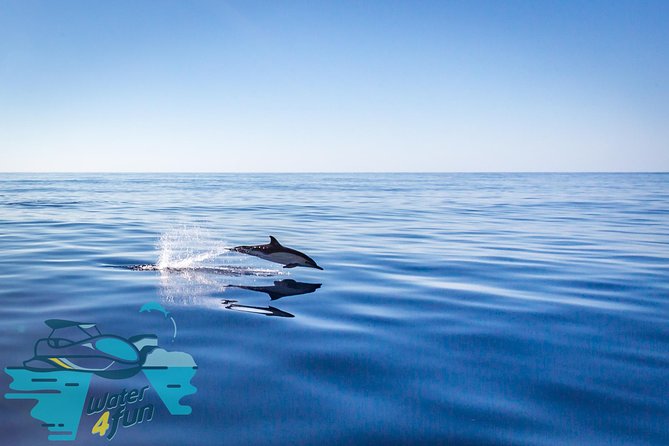
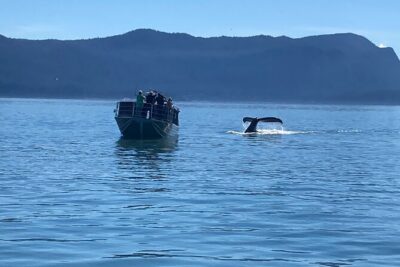
The boat is built for visibility. The best part from the perspective of a watcher is the small passenger count (up to 15) and the seating layout that keeps sightlines open on both sides.
People point out that the craft is small enough that you’re not stuck behind a crowd. In practical terms, that means when a pod comes close, you’re more likely to get a clear view without standing on your seat or playing Tetris with other cameras.
You’ll also feel the motion. It’s described like a thrill ride over waves, and that makes sense for a speedboat-style tour. If you get seasick easily, pack accordingly and consider sitting where you feel most stable (the crew can usually help you choose once you’re onboard).
One more detail: there’s a safe feeling on board thanks to provided life jackets and safety gear. Still, consider that getting in and out may be a little tricky for anyone with limited leg flexibility, since the seating layout involves partitions and standing to see across can be part of the routine.
What you might see: dolphins up close and whale possibilities
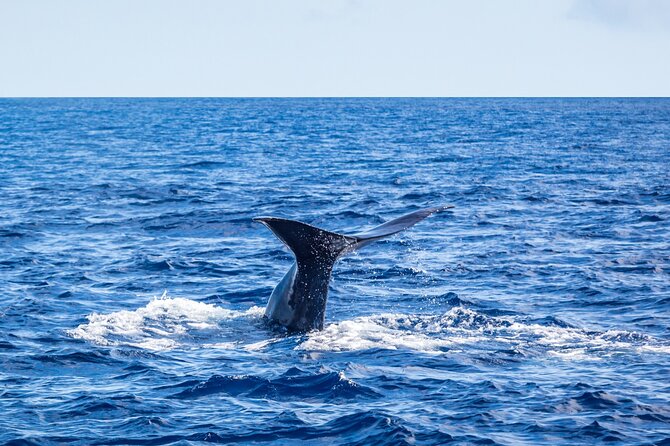
This tour focuses on cetaceans broadly, and the guarantee is specific: they guarantee at least one cetacean specimen of the cetacean order. That’s a helpful promise because it removes the worst-case scenario of seeing nothing at all.
But it also means you shouldn’t plan your day around one exact species name. The family and species can’t be predicted, and the ocean decides what shows up.
That said, the evidence from past outings on Terceira is strong for variety:
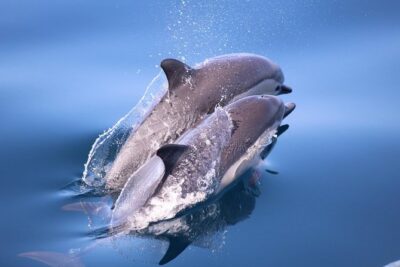
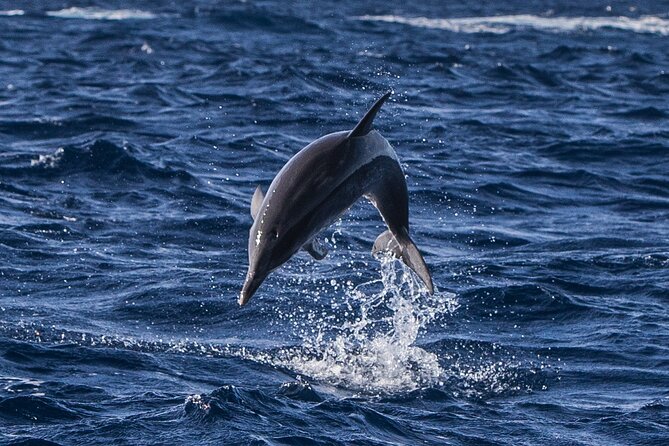
- Dolphins can come in big pods and may swim very close to the boat for long periods.
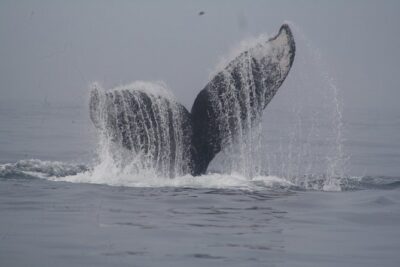
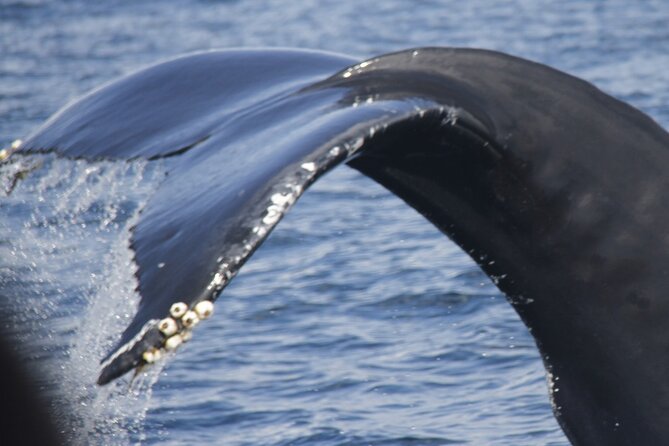
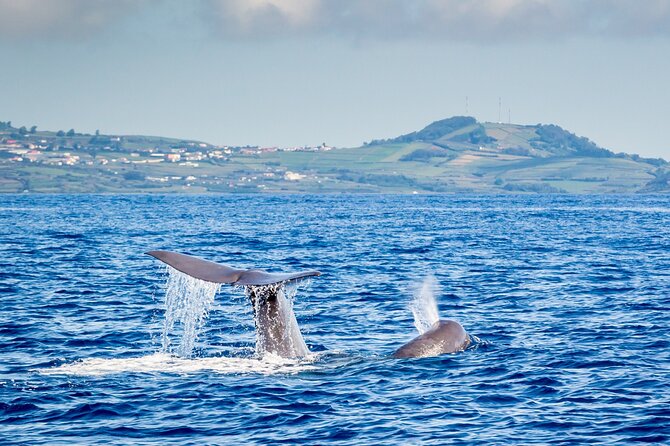
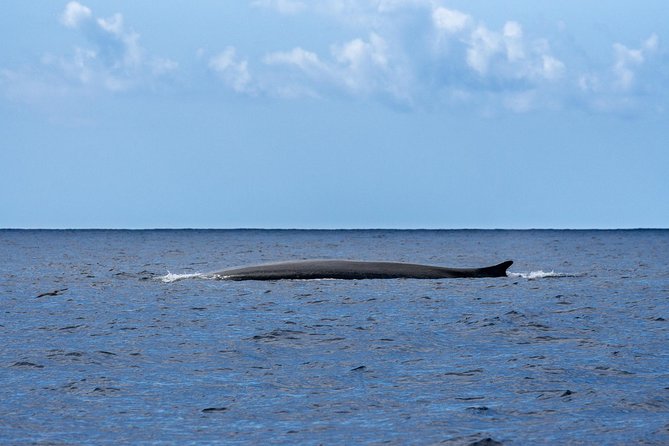
- Whales are possible too, including reports of sperm whales and other whale types like sei, humpback, pilot whales, and even blue whale with a calf in at least one instance.
- There are also sightings of multiple dolphin species in one trip, with examples like common dolphins, Risso’s dolphins, Atlantic spotted dolphins, bottleneck dolphins, and spotted dolphins.
So how should you think about it? Go expecting dolphins to be the more consistent highlight, and treat whales as the bonus that can turn a good trip into a story you’ll retell for years.
Dolphins and whales: how the viewing actually works on the water
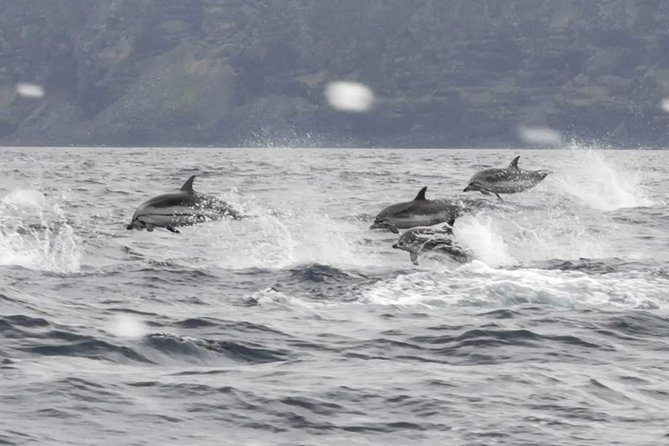
Once you’re in the right area, the viewing tends to be active. When dolphin pods appear, you may get repeated passes near the boat rather than a single quick sighting. Some trips include long hangs with a pod—exactly what you want when you’re trying to watch behavior, not just snap photos.
For whales, it’s more about timing and repetition. Whales surface, breathe, and move on their schedule. That’s why the guide’s job matters: directing your attention quickly, explaining what you’re likely looking at, and helping you stay ready for the next surface.
A theme in the best experiences: the team doesn’t treat a sighting as a checklist item. They keep watching and staying respectful of the animals. When they find a group (dolphins or whales), you often get enough time for the moment to sink in.
The guide style: clear explanations without getting in the way
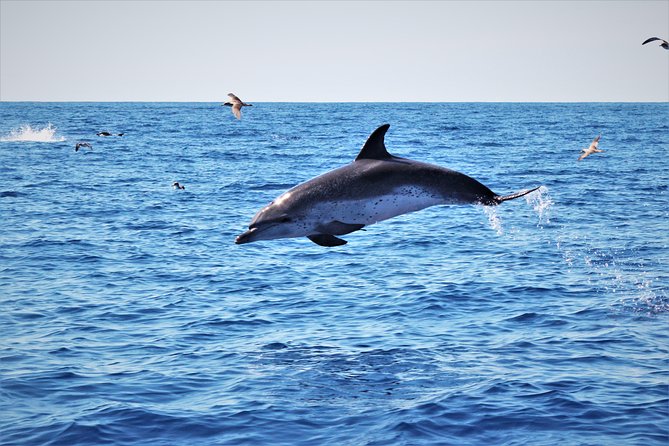
You’ll hear about cetaceans constantly during the cruise—species identification cues, biology, and migration themes. This is a trip where the guide helps you see better, not just learn words.
One name that comes up often is Victor. People credit him for keeping things engaging and pointing out where to look so you don’t miss the next moment. That matters because on a moving boat, attention is limited. A good guide helps you focus fast—what direction to scan, what behavior signals what kind of animal, and when it’s time to watch closely rather than talk.
It’s also worth noting that tours can run in different languages depending on needs, but this one is listed as available in English.
Value on paper: does $78.64 feel fair?
For a 3-hour whale and dolphin excursion with a small group cap and a sighting guarantee (at least one cetacean specimen), $78.64 per person can feel like fair value—especially on a day when you get both dolphins and whales.
Here’s the honest way to judge it:
- If you see dolphins up close (which is often the strong point), the experience is already worth it for most people.
- If a whale shows up, you’re getting a major upgrade for the same price.
- If visibility is poor or weather isn’t cooperating, you might get fewer or shorter sightings—but you’re not completely exposed thanks to the guarantee and the option to reschedule if a cetacean isn’t seen.
So, it’s a “chance to win big,” but not a blind lottery.
Weather reality: what can go wrong (and how to plan for it)
The tour depends on good weather. That’s not a gimmick—ocean conditions can affect safety and spotting. If the weather is too poor, cancellations can happen, and the operator can offer a different date or a refund.
You should also plan for the fact that visibility and sea conditions affect what you can see. One disappointing outing started with dolphins only due to poor visibility, and then improved later as the skies cleared, with whales showing up once conditions got better.
Translation: bring flexibility. If you’re on a tight schedule, it’s still a smart tour to book, but try to leave some room in your itinerary in case you need to switch dates.
What to bring (and what to wear)
The tour includes a life jacket and safety gear, so you don’t need to pack one. You also shouldn’t overthink it, but you do want to be comfortable on a moving boat.
A small practical tip from an actual passenger: bring something to cover up. Even on sunny mornings, the wind on the water can cool you down fast. Think layers you can handle while seated or when you stand to look.
If you get motion sickness, bring your preferred solution. The boat can bounce over waves, and that’s part of the adventure vibe.
Should you book this whale and dolphin tour on Terceira?
Yes—if your goal is a focused wildlife outing that combines a real search strategy with great viewing odds, this is a strong pick.
Book it if:
- You want dolphins up close and a real chance at whales.
- You like small groups and better sightlines.
- You appreciate being guided by a spotter system rather than hoping for the best.
Skip it (or book with backup dates) if:
- You only have one morning available and weather risk would ruin your trip.
- You’re very sensitive to boat motion and can’t handle choppy conditions.
- You need extremely easy mobility on/off the boat, since seating access may be a bit awkward for some.
My take: for Terceira, this is one of the better ways to spend a morning at sea. The combination of small-boat visibility, an active land-spotter plan, and the guarantee that you’ll see at least one cetacean is exactly what makes a whale-watching day feel “worth it,” even when the ocean decides to be a little moody.
FAQ
FAQ
What time does the whale and dolphin watching tour start on Terceira?
It starts at 8:30 am.
How long is the experience?
The duration is about 3 hours.
Where do I meet for the tour?
You meet at Water4fun – Whale Watching Terceira island, 9700-154 Angra do Heroísmo, Portugal.
Is there a sighting guarantee?
Yes. The tour guarantees at least one sighting of a cetacean specimen (whales and/or dolphins), but it does not guarantee the exact species or family.
What happens if no cetaceans are seen?
If no cetacean specimen is seen, you can reschedule a second attempt free of charge (subject to availability). As a last resort, you can request a full refund.
What’s included in the price?
Included items are a life jacket and safety gear, plus the cetacean sighting guarantee.
Is this tour in English?
Yes, the tour is offered in English.
How big is the group?
The tour has a maximum of 15 travelers.
Can I cancel for a refund?
You can cancel up to 24 hours in advance for a full refund.
What if the tour is canceled due to weather?
If it’s canceled because of poor weather, you’ll be offered a different date or a full refund.