REVIEW · FRASER ISLAND
Hervey Bay: Best Value Half Day Whale Watching Cruise
Book on Viator →Operated by Hervey Bay Whale Watch - Quick Cat II · Bookable on Viator
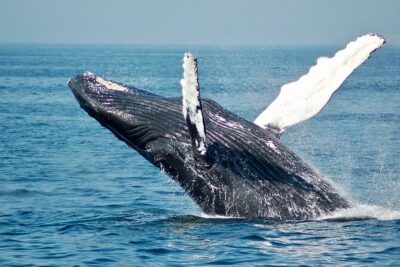
Humpbacks can be right in front of you. On this 4-hour Hervey Bay whale watching cruise, you sail past K’Gari (Fraser Island) looking for humpback whales during their migration season, with a local crew calling out what to watch for. I especially like the four viewing decks, which makes it easier to find the right angle when whales surface and dive close to the boat.
My second favorite detail is the simple onboard touch: a morning or afternoon tea served on deck as you cruise back toward shore. The one drawback to keep in mind is sea conditions. On a day with rougher water, even a fast catamaran can make some people feel queasy, so plan for motion.
In This Review
- Quick Take: Best Things About This Hervey Bay Whale Cruise
- Quick Cat II: Getting You Close to Humpbacks in Real Time
- Best Season Matters: July to October Whale-Watching Odds
- K’Gari (Fraser Island) Stop: Coastal Views and the Start of the Search
- Indian Head and Great Sandy National Park: Where the Ocean Gets Real
- Wildlife Beyond Whales: Dolphins, Turtles, Dingoes, and Seabirds
- Deck Views, Comfort, and On-Board Tea (Morning or Afternoon)
- Value for Money: Is $85.35 Worth It?
- Who This Cruise Suits Best (and Who Should Rethink It)
- Should You Book Hervey Bay Whale Watch on Quick Cat II?
- FAQ
- How long is the Hervey Bay whale watching cruise?
- Do I choose a morning or afternoon departure?
- Where does the cruise start and end?
- What animals might I see besides humpback whales?
- Are there specific whale viewing months for this cruise?
- Is this tour family-friendly?
- Is there a limit on group size?
- Are children allowed on the cruise?
- Is the experience dependent on weather?
- What is the cancellation window for a full refund?
Quick Take: Best Things About This Hervey Bay Whale Cruise
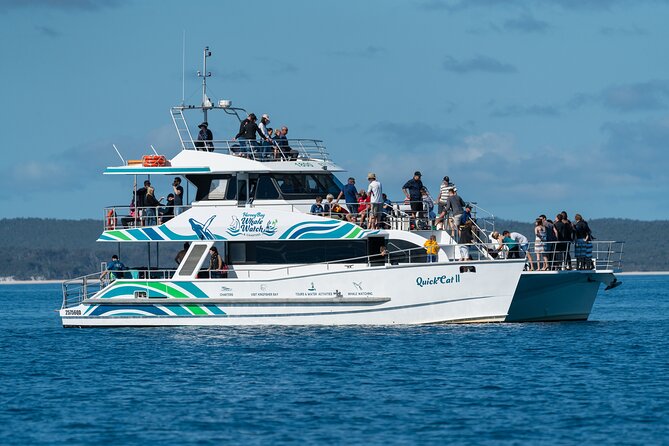
- 4 viewing decks so you’re not stuck watching through one narrow view
- Morning or afternoon departure to fit your day in Hervey Bay
- Humpback focus during July to October when whales migrate to warm waters
- K’Gari (Fraser Island) and Indian Head along the route for strong scenery between whale sightings
- Family-friendly pace with a short, half-day format that kids can handle
- Extra wildlife clues: dolphins, turtles, dingoes, and seabirds may show up on the journey
Quick Cat II: Getting You Close to Humpbacks in Real Time
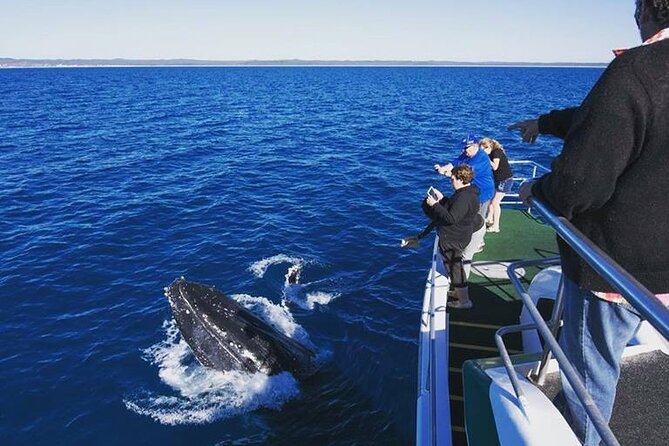
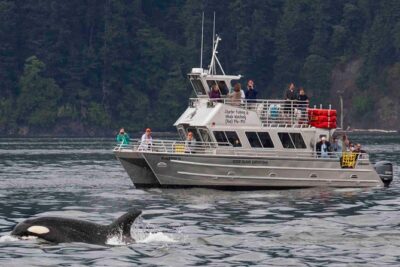
This is a straightforward half-day wildlife cruise with one job: find humpback whales in the waters of Hervey Bay and the Great Sandy Straits. The boat is Quick Cat II, a catamaran setup designed for speed and visibility, and the big practical win is the layout. With four viewing decks, you can move around as the action changes. That matters because whale watching is rarely predictable—one minute you’re scanning horizon lines, and the next you’re watching a head pop up closer than you expected.
The cruise is built around watching behavior, not just spotting spouts. You’re looking for the sequence: whales surfacing, swimming, and then moving back through the waves. That’s where a deck-to-deck plan helps. If the boat shifts position or angles toward a pod, you’ll want your eyes on the water immediately, and you don’t want to be trapped behind one rail line.
The crew also play an important role. They share what to watch for in whale behavior and help you connect what you’re seeing—like how animals move relative to the boat and how often you might get another look. Even if it’s your first time doing whale watching, you’ll have less guesswork and more focus.
One note: this is a nature activity, so your best view depends on where the whales are that day. The route gives you chances, but the ocean ultimately decides.
You can also read our reviews of more tours and experiences in Fraser Island.
Best Season Matters: July to October Whale-Watching Odds
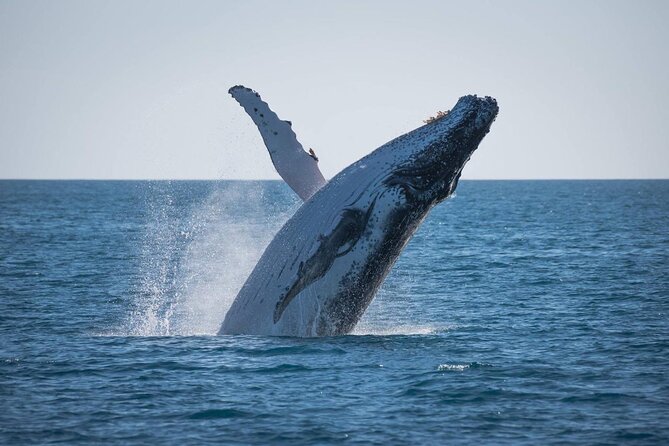
If you’re planning around whale watching in Hervey Bay, the timing is a big part of the value. This cruise targets the migration window when humpback whales move to Australia’s warm waters between July and October. That seasonal focus isn’t just marketing—it’s the reason this spot is famous.
During peak months, you can expect the ocean to be more “active” with whales moving through the area. But even in season, whales aren’t staged like a show. Some days bring lots of sightings. Other days might mean fewer whales, but still very close encounters if the boat can approach safely. The practical takeaway for you: don’t build your schedule assuming a guaranteed number of sightings. Build your schedule assuming you’ll have multiple opportunities to scan the water from different angles.
The cruise length helps here too. Four hours is long enough to get into position, search, and enjoy a few viewing windows, but short enough that you can keep your energy for the rest of your trip. If you’re in Hervey Bay for a tight itinerary, this half-day approach is often the sweet spot: you get the big animal moment without surrendering your whole day.
K’Gari (Fraser Island) Stop: Coastal Views and the Start of the Search
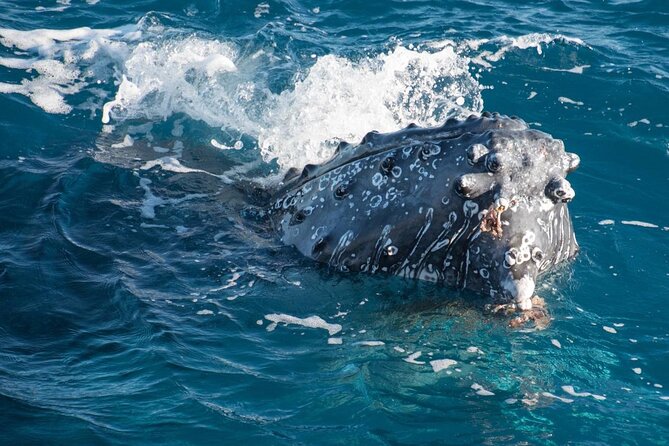
The cruise includes a stop at K’Gari (Fraser Island). This is more than a scenic footnote. Starting the journey with that island context helps you understand where you are: warm coastal waters, exposed beaches, and a big stretch of ocean where migrating whales travel along the coastline.
In practical terms, this part of the trip is your setup phase. As you move away from the marina and out into the wider water, you’ll have time to get oriented—where the best viewing deck feels right for you, how the boat’s movement affects your scanning, and when it becomes realistic to expect whale sightings versus dolphins or seabirds.
Also, Fraser Island’s presence makes the route feel like a true regional excursion, not just a drive-by in open water. You’re cruising past a place people come to for real nature value, so even if whale activity is quiet for a stretch, you still have strong scenery and a sense of place.
What to watch for here: seabirds riding the air currents, dolphins appearing in bursts rather than slow cruising, and general marine activity that often shows up when the water is productive.
Indian Head and Great Sandy National Park: Where the Ocean Gets Real
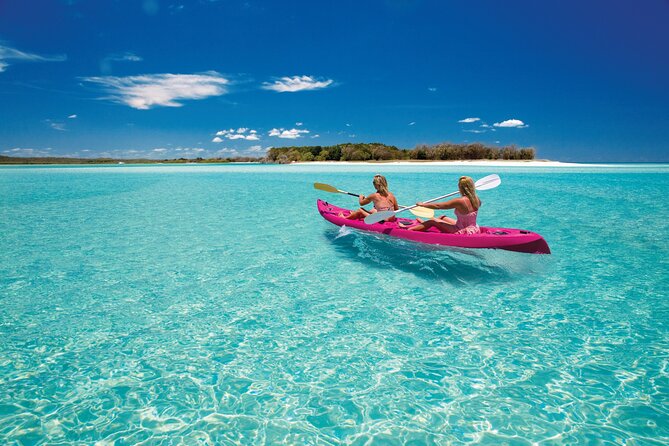
As you continue, you’ll pass by Indian Head and spend time in/near Great Sandy National Park areas (the cruise uses these waters as part of its whale-search route). These are the kinds of locations that make whale watching feel like more than standing on a boat.
Why they matter: headlands and protected coastal zones often concentrate marine life. That can mean better chances for humpbacks to come closer and for other animals—like turtles and dolphins—to show up as you track the whales’ movement patterns.
From your side, the best way to enjoy this section is to pick one deck where you can stay for a while, then switch when you see the boat angle change. If you keep rotating constantly, you’ll lose time re-reading your view. Better: watch the water continuously, and let your eyes adjust after each reposition.
Also, this is a good stretch to pay attention to your own comfort. Motion can change as the boat steers and as the sea state shifts. If you’re prone to seasickness, this is where you’ll want to be proactive—sit where you feel most stable, keep hydrated, and consider any motion-sickness prep you normally use. One review reflection mentioned rougher water and seasickness, even on a boat that is usually stable, so it’s not something to ignore.
Wildlife Beyond Whales: Dolphins, Turtles, Dingoes, and Seabirds

A humpback sighting is the headline, but the best whale watching days feel alive with other wildlife too. This cruise explicitly notes you may see dolphins, turtles, dingoes, and seabirds on the way.
Here’s how to think about each one:
- Dolphins often show up quickly, and their activity can help you read the water’s mood.
- Turtles are usually less dramatic than dolphins, but they’re a nice bonus when you’re scanning surface lines.
- Seabirds help you track where food might be moving, and they can give your eyes something to focus on when whales are farther out.
- Dingoes are specifically mentioned for this experience, which adds an extra layer of Australian wildlife beyond the ocean view.
The main benefit of this “bonus wildlife” approach is psychological. Whale watching can be calm and patient early on. When you also have dolphins or seabirds to watch, the trip doesn’t feel like you’re waiting for a single miracle moment. It’s more like a guided wildlife day with the whales as the main act.
And if you do get close whale encounters, it often makes the whole journey click: you start noticing the water patterns, the way whales move through waves, and how the crew’s guidance connects the dots.

Deck Views, Comfort, and On-Board Tea (Morning or Afternoon)
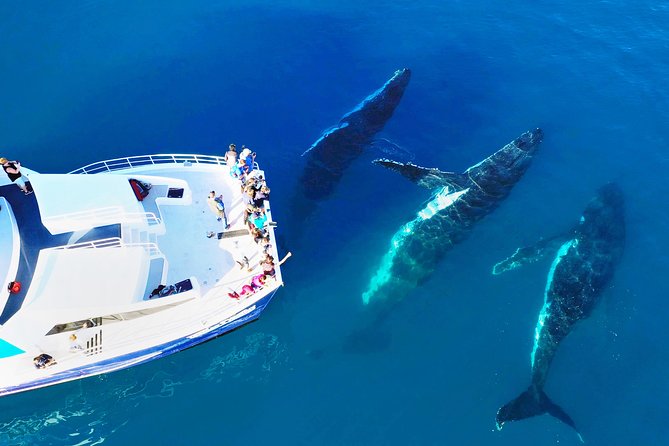
This is where the cruise earns its repeat bookings. You’re on a boat for about 4 hours, with time to search for whales and then to relax during the return. That return portion includes morning or afternoon tea served on deck, which is a simple but very smart way to keep the experience feeling friendly, not rushed.
Tea on deck does two things. First, it gives you a warm break if you’re out in sea air. Second, it keeps you engaged with the experience instead of retreating indoors and missing the next whale surfacing window. Even if you’re not actively scanning with your eyes, you can still feel like you’re part of the scene.
On the comfort side, consider two realities:
- You’ll want to stay near the rail for best sightlines, which can be cooler if the wind picks up.
- The water can be rough sometimes. One person noted seasickness risk when conditions were choppier than expected. Even if you think you handle boats fine, it’s worth having a plan.
If you’re traveling with kids, this onboard rhythm matters. A half-day format plus a snack/tea break helps keep attention and energy steady.
Practical tip: bring layers and something to hold onto your phone/camera gear. When you’re watching wildlife, you want to be able to switch between scanning and snapping photos without fumbling.
Value for Money: Is $85.35 Worth It?
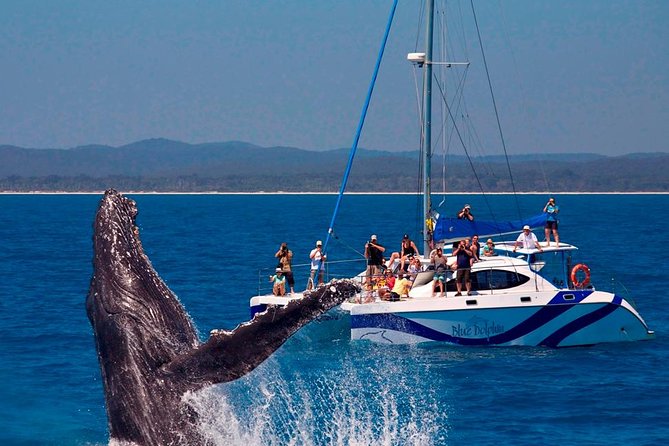
At $85.35 per person for an approx. 4-hour cruise, the value is mostly about what’s included and how focused it is. You’re paying for:
- boat time on the water with specialized viewing
- a local crew guiding you toward whale-spotting opportunities
- a short itinerary that works even on busy travel days
- the included tea service on the return
In whale watching, your biggest costs are usually time and uncertainty. This tour helps reduce both because it’s not a long full-day plan where you might waste hours in transit. Four hours is enough to get into position and enjoy real scanning from multiple decks.
Also, with a maximum group size of 85 travelers, it’s large enough for a fun atmosphere but small enough that the deck areas usually still feel manageable. You’ll still want to arrive with a plan for where you’ll stand, but you’re not trapped in a massive cattle-call setup.
Booking value tip: the experience is commonly booked about 21 days in advance on average. That suggests demand can be steady in the season. If you’re visiting during peak whale months, booking ahead can help you avoid “whatever time is left” compromises.
Who This Cruise Suits Best (and Who Should Rethink It)
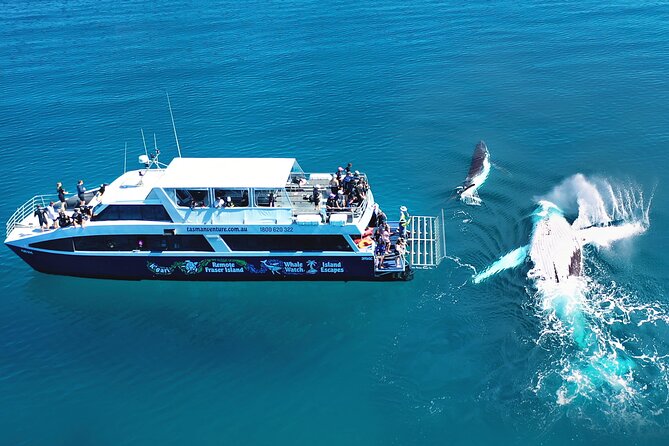
This is a strong match if you want a family-friendly way to see humpback whales without committing to a full day. The half-day timing is also great for people who like active sightseeing but don’t want to lose an entire day to weather checks and transit.
It’s especially suited to:
- families with kids who can handle a boat ride for a few hours
- couples or friends who want a single standout wildlife experience in Hervey Bay
- anyone who prefers a guided approach with on-the-water interpretation
It may be less ideal if:
- you’re very sensitive to motion sickness and you have no coping strategy
- you need guaranteed whale sightings (no whale watching activity can promise that)
If you do have motion sensitivity, plan around comfort. Pick the most stable area you can find, keep your eyes on the horizon when possible, and don’t underestimate hydration.
Should You Book Hervey Bay Whale Watch on Quick Cat II?
I’d book this if your goal is a focused, high-value Hervey Bay humpback whale experience with the practical advantages of multiple decks and guided interpretation. The season window (July–October) gives this cruise a real reason to exist, and the half-day structure means you’re not sacrificing your whole trip for one activity.
If you’re the type who wants maximum certainty, you might feel uneasy with any whale watching plan. But if you’re okay with nature being nature and you want strong odds plus a well-timed itinerary, this one is an easy yes.
If you’re on the fence because you worry about rough water, that’s the only major caution I’d seriously consider. Pack for weather, bring motion-sickness support if you use it, and aim to enjoy the day even if whale activity varies.
In short: if humpbacks are on your wish list and you want a day that mixes ocean wildlife with real scenery from K’Gari and the Great Sandy region, this cruise is a smart pick.
FAQ
How long is the Hervey Bay whale watching cruise?
The cruise is about 4 hours.
Do I choose a morning or afternoon departure?
Yes, you can choose between a morning or an afternoon tour.
Where does the cruise start and end?
It starts at Great Sandy Straits Marina Urangan Hervey Bay (Great Sandy Straits Resort, Buccaneer Dr, Urangan QLD 4655, Australia) and ends back at the meeting point.
What animals might I see besides humpback whales?
Along the way, the experience may include dolphins, turtles, dingoes, and seabirds.
Are there specific whale viewing months for this cruise?
The cruise focuses on humpback whales migrating to Australia’s warm waters between July and October.
Is this tour family-friendly?
Yes, it’s described as family friendly and a popular choice with kids.
Is there a limit on group size?
Yes. The maximum number of travelers is 85.
Are children allowed on the cruise?
Children under 18 must be accompanied by an adult.
Is the experience dependent on weather?
Yes. It requires good weather, and if canceled due to poor weather you’ll be offered a different date or a full refund.
What is the cancellation window for a full refund?
You can cancel up to 24 hours in advance for a full refund.