REVIEW · SAN JUAN ISLANDS
Whale Watching Tour from Anacortes
Book on Viator →Operated by Outer Island Excursions · Bookable on Viator
Orcas show up fast here. This is a high-speed whale watching cruise from Anacortes built around getting you into killer whale country with naturalist-led searching and a smaller vessel feel. I really like how the guides talk wildlife in plain, practical terms (with crews that often include Drew, Tiffany, and Hannah), and you also get the kind of scenery that makes you happy even if the ocean goes quiet for a moment.
Two more things I like: whale sightings are guaranteed from April through early September, and the tour regularly turns up other local ocean characters like seals, sea lions, porpoises, otters, and seabirds—not just whales. One consideration: it’s a boat trip in the Pacific Northwest, so you’ll want to plan for wind and cold, especially if you’re going later in the season.
In This Review
- Key highlights worth aiming for
- Why Anacortes works so well for orca watching
- The Blackfish-style boat experience: speed, comfort, and staying warm
- How the 3-hour outing really unfolds at sea
- Stop 1: Getting underway from Anacortes Harbor
- Stop 2: Searching the San Juans and Canadian Gulf for pods
- Wildlife beyond whales: seals, sea lions, otters, birds, and more
- Naturalist-guided searching: what the crew adds (Drew, Capt Matt, Tiffany)
- Weather, wind, and what to pack for October-to-summer swings
- Price and value: what $119 buys you
- Who this tour is best for (and who should think twice)
- Should you book the Whale Watching Tour from Anacortes?
- FAQ
- Where is the meeting point for the tour?
- How long is the whale watching cruise?
- Do I need to take a ferry to reach the tour?
- What animals might I see on the cruise?
- Are whale sightings guaranteed?
- What is the maximum group size?
- Is it a mobile ticket?
- What happens if the tour is canceled due to poor weather?
- What is the cancellation policy if I cancel?
Key highlights worth aiming for
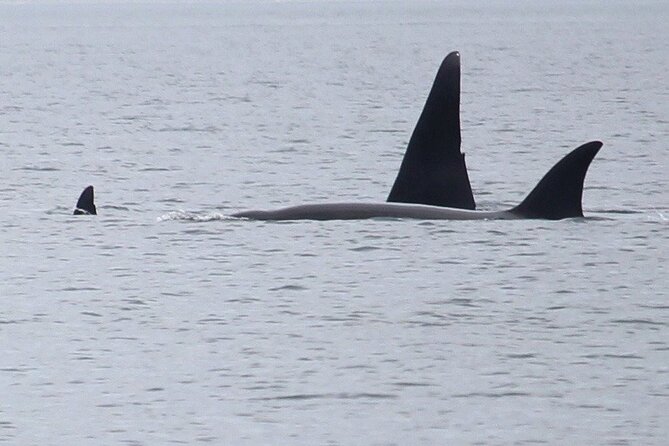
- Small, fast vessels designed to cover ground quickly in the San Juan Islands
- Whale sightings are guaranteed during the prime window (April through early September)
- 98% whale sighting rate noted for trips overall
- Orca pods often happen early, so you may get your first sightings within minutes
- Naturalist-style wildlife talk with crew members like Drew, Capt Matt, Tiffany, and Isabelle
- No ferry needed, since you launch from Anacortes
Why Anacortes works so well for orca watching
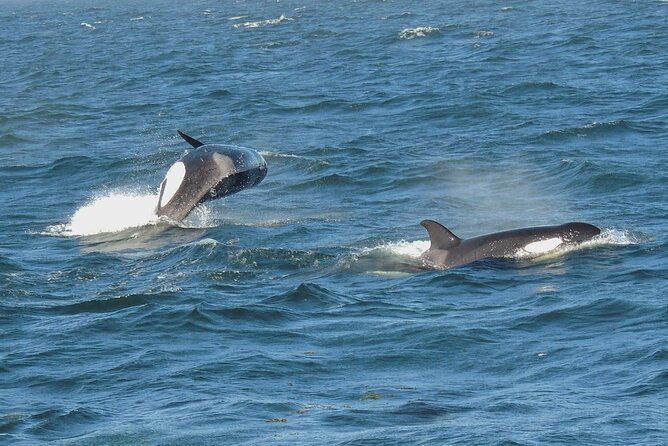
If you’re serious about seeing killer whales in the Pacific Northwest, location matters. Anacortes is the home port for San Juan Islands cruises, and it puts you in reach of the waters where resident orcas are a real part of local life. You’re also not starting with a long, complicated ferry day. You drive in, meet at 2201 Skyline Way, and head out by boat.
Another practical win: Anacortes is close enough to major hubs without feeling like a full travel ordeal. It’s about 90 minutes north of Seattle, and it’s also a short drive from places like Bellingham and Birch Bay. That means you can fit this into a day without building your schedule around ferry times.
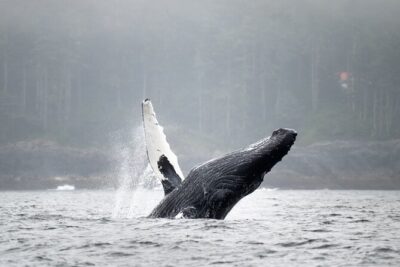
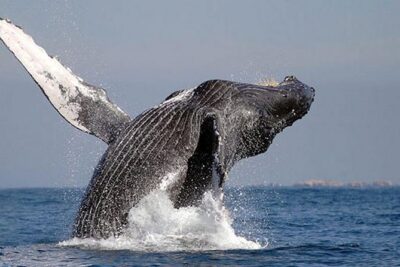
And then there’s the “got lucky” factor, but with structure. This tour searches specifically for orca, humpback, gray whales, and minkes, and it’s built around the idea that good sightings are possible but you still need to be out on the water long enough and in the right areas.
You can also read our reviews of more tours and experiences in San Juan Islands.
The Blackfish-style boat experience: speed, comfort, and staying warm
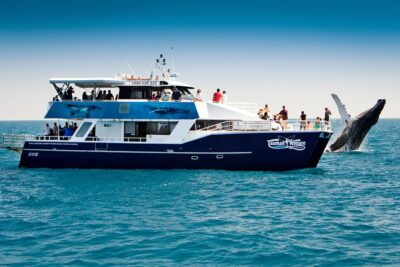
This cruise uses high speed vessels—smaller and quicker than the big slow boats you see elsewhere. The point isn’t just excitement. Faster travel helps when whale sightings are patchy. You’re trying to connect with where whales are actively moving and feeding, and that takes more repositioning than you’d need in calm, predictable waters.
You’ll also notice a comfort detail that matters when the ocean wind hits: many departures offer interior seating, so if it gets chilly you can shift inside without losing the views. One good habit: bring layers you can actually adjust. A cold day on the water isn’t only about temperature. It’s wind + spray + time outside.
A couple of smart gear reminders come up again and again:
- Bring something wind proof.
- Consider binoculars, because spotting wildlife at the right distance can take a minute.
- If you’re sensitive to cold, plan for it rather than hoping you’ll be fine.
How the 3-hour outing really unfolds at sea
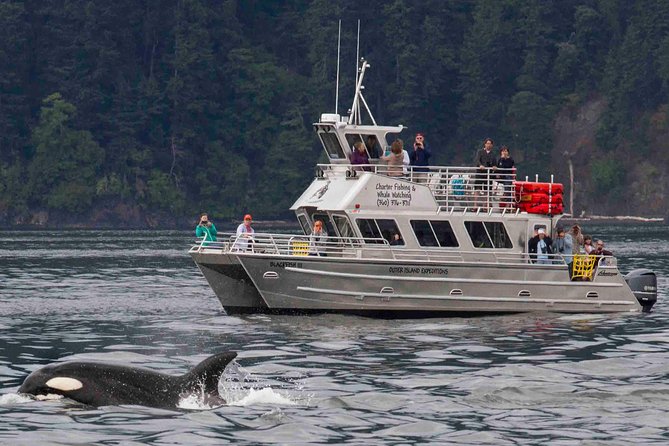
Most trips run about 3 hours (roughly 3–4 hours in practice, and some outings run closer to 4 to 4½ hours). That’s long enough to search, find a pod, and slow down for viewing time. It’s also short enough that the day doesn’t get swallowed whole.
The rhythm typically goes like this: you start from Anacortes, head out into the San Juan Islands and the Canadian Gulf islands, then search for whales and pause when the wildlife appears. If you’ve ever watched whales from a distance, you know the best part isn’t the first sighting. It’s the minutes that follow—when you can see behavior and understand what you’re actually looking at.
There’s also a real “staying respectful” element. In orca country, it’s not just about wanting a closer look. Safety and legal distance matter, and you may not get the super-close views some people dream about. The good news: you can still get great moments when the pod decides to move past you or when whales surface in a predictable rhythm.
Stop 1: Getting underway from Anacortes Harbor
Your tour begins at 2201 Skyline Way, Anacortes, WA 98221. The practical reason this matters: you’re not adding extra variables like commuting to a far dock, dealing with ferry boarding, or losing time in transit. You’re already in the launching zone, and the day can stay focused.
This is also where the first “PNW reality check” happens. Even on a bright day, it can turn breezy quickly once you’re out. That’s why I treat this start as a reminder to dress as if you’ll be outside for the entire time you’re not actively warming up inside.
If you’re driving in, think ahead about parking. One useful tip I’ve picked up from the experience of people doing this route: try curbside parking first to avoid a parking charge that can apply in some areas.
Stop 2: Searching the San Juans and Canadian Gulf for pods
Once you’re out, the tour’s mission becomes clear: find orca pods, plus the chance of humpbacks, gray whales, and minkes. You’ll also run into a lot of other wildlife along the way—often the kind you didn’t plan for, like sea otters popping up near the shoreline and birds tracking the action.
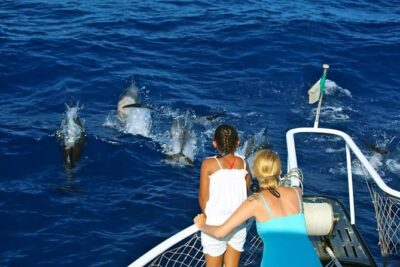
The most memorable trips tend to follow a pod for a while. One of the stand-out patterns in past experiences is that orcas can show up extremely early—sometimes within minutes—so you’re not stuck waiting with your binoculars idle. Other times, the day becomes a search with frequent small rewards: seals on the water, sea lions barking and lounging, porpoises surfacing, and birds giving you visual cues that something bigger might be around.
And when humpbacks or orcas surface, the difference between a good moment and a great one is understanding behavior. This is where the naturalists steer things. They’re often naming what you’re seeing, pointing out typical movement patterns, and explaining how whales feed and travel in these waters.
Wildlife beyond whales: seals, sea lions, otters, birds, and more
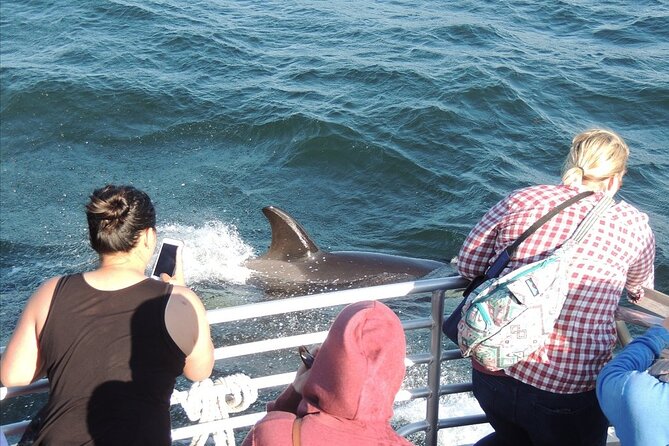
The best part of going whale watching in the San Juans is that whales aren’t the only show. This tour builds in a broad wildlife watch, and it’s not just random luck—there are many species that share the same food webs.
Here’s what you can realistically expect to see in the mix:
- Seals and sea lions lounging and hauling out
- Porpoises that pop up quickly and vanish
- Sea otters that can be spotted with patient scanning
- Seabirds that help mark where activity is happening
- Sometimes bigger moments like bald eagles in the scenery package
One detailed kind of lesson that can make the trip feel extra worth it: naturalists may explain what predators leave behind after feeding. For example, there are moments when you might see the floating leftovers of a hunt, and the crew can connect that to how whales process food.
Naturalist-guided searching: what the crew adds (Drew, Capt Matt, Tiffany)
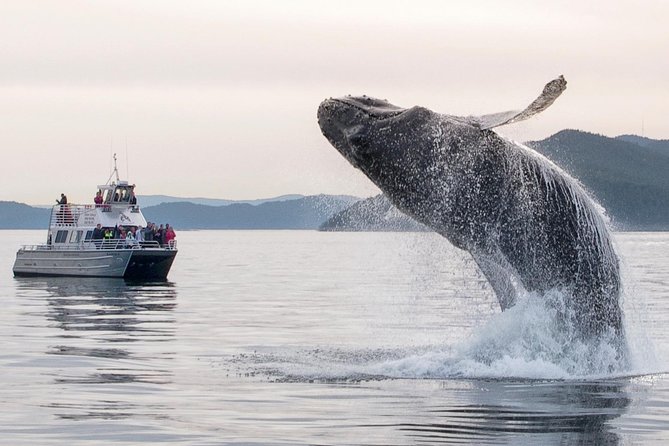
On this kind of tour, the difference between merely seeing animals and truly enjoying the day is the crew’s interpretation. When the boat finds whales, you don’t want a “good luck out there” vibe—you want someone calling out what’s happening and why.
The on-water team often includes naturalists and captains such as Drew and Capt Matt, with mates who frequently share the guide workload (including names like Tiffany, Hannah, Isabelle, and others). That teamwork shows up in how smoothly the trip runs: people answer questions, explain what you’re looking at, and keep the focus on whale behavior without turning it into a lecture.
I also like that the crew’s approach tends to emphasize respect for wildlife. You may not always get the closest angle you’d like, but you’ll understand why the boat stays at a distance and how that helps protect both animals and viewers.
Weather, wind, and what to pack for October-to-summer swings
This is not a “wear a T-shirt and forget it” cruise. Even in warmer months, the boat wind can feel sharp. In early spring and summer, you may just need layers. Later in the year, people report that multiple layers are the move, and a raincoat is a smart hedge.
From experience-based advice, here are the essentials I’d treat as non-negotiable:
- A wind proof layer
- Several layers so you can adjust as you move between inside and outside
- A rain shell or raincoat
- Sunglasses (wind glare is real on open water)
- Binoculars if you own them
Also, consider timing. You can hit the prime whale window from April through early September, when sightings are guaranteed. Outside that window, whales still appear often, but you’re not buying the same level of certainty.
Price and value: what $119 buys you
At $119 per person for an approximately 3-hour cruise, this is not a budget activity. But it can feel fair when you compare what you’re actually paying for: a fast boat, a guided search, and access to whale habitat from a port that’s designed for this purpose.
Here’s why the value can work:
- Whales are seen on most trips (a noted 98% rate), so your odds are strong.
- You get a naturalist guide, not just a captain who drives and leaves you guessing.
- The whale sighting guarantee during April through early September reduces the fear that you’ll just buy a scenic boat ride.
Is it still weather-dependent? Yes. This is the ocean. But the tour data also states that if cancellation happens due to poor weather, you’ll be offered another date or a full refund. That’s part of the value equation, because you’re not stuck with a sunk cost when conditions make viewing impossible.
Who this tour is best for (and who should think twice)
This cruise is a great fit if you:
- Want a real shot at orcas without needing ferry logistics
- Like guided wildlife explanations while you scan the water
- Prefer smaller, faster boat trips over slow rides
- Plan to travel during April through early September for guaranteed sightings
It might be less ideal if:
- You’re extremely sensitive to cold and wind and don’t plan to dress for it
- You need a very quiet, minimal-interaction experience (this tour is active, with crew calling out sights and sharing info)
- You’re expecting ultra-close orcas every time. Distance rules apply, and your viewing can depend on pod behavior.
Should you book the Whale Watching Tour from Anacortes?
I’d book it if your priority is orca country with guided searching and you can handle PNW weather. The big reasons to go are simple: the location is right, the boat style is made for finding wildlife, and the April through early September guarantee gives you peace of mind that’s hard to find elsewhere.
One last decision tip: if you’re traveling in peak season, don’t wait. This tour is often booked about 27 days in advance on average, so earlier planning helps you lock in a time that fits your trip.
FAQ
Where is the meeting point for the tour?
The tour starts at 2201 Skyline Way, Anacortes, WA 98221, USA.
How long is the whale watching cruise?
The tour is listed as approximately 3 hours.
Do I need to take a ferry to reach the tour?
No. The tour departs from Anacortes and does not require a ferry.
What animals might I see on the cruise?
You can look for resident orca, humpback whales, gray whales, and minkes, plus other wildlife such as seals, porpoises, sea lions, otters, and a variety of birds.
Are whale sightings guaranteed?
Yes, sightings are guaranteed from April through early September.
What is the maximum group size?
This activity has a maximum of 49 travelers.
Is it a mobile ticket?
Yes, the tour includes a mobile ticket.
What happens if the tour is canceled due to poor weather?
If it’s canceled because of poor weather, you’ll be offered a different date or a full refund.
What is the cancellation policy if I cancel?
This experience is non-refundable and cannot be changed for any reason.