REVIEW · HERMANUS
Whale Watching Walking Tours (Land-Based) – from JUNE 2025
Book on Viator →Operated by Percy Tours · Bookable on Viator
This is whale watching with a slower pace and better focus. I like the private, undivided-guide setup and the fact that you start with whale education at the Whale House Museum, so you know what you’re scanning for. The main thing to consider is also the biggest reality check: you’re dependent on weather and sea conditions, so whale sightings are not guaranteed from every viewpoint.
What makes it interesting is the land-based format. You travel by air-conditioned vehicle to several cliff-top areas, then walk paved coastal paths to reach coves and inlets where whales have been spotted before. The drawback? Walking and standing at viewpoints for a few hours means you’ll want comfortable shoes and be ready for sea breeze and changing light.
In This Review
- Key Things I’d Pay Attention To
- Why Walking Viewpoints Beats Crowded Cruises in Hermanus
- The Whale House Museum Start: Your 20-Minute Whale Field Guide
- 5–7 Coastal Stops by Vehicle, Then Walking Between Viewpoints
- What You’re Actually Learning While You Scan
- The Chance to See Whales (Without the Hard Sell)
- How Long This Takes and How to Plan Your Day
- Who This Tour Is Best For
- Price and Value: What $57.51 Really Buys You
- Practical Tips for Better Viewing and Better Photos
- Final Thoughts: Should You Book This Land-Based Whale Tour?
- FAQ
- Where does the tour start?
- How long is the whale watching walking tour?
- Is this a private tour?
- Do you get pickup?
- What’s included with the tour besides the coastal walking?
- How many coastal spots do you visit?
- Are whales guaranteed to be seen?
- Does the tour require good weather?
- What is the cancellation window?
- Are there any limits on who can participate?
Key Things I’d Pay Attention To
- A private tour with a guide who controls the pace, so you can ask questions and get real-time spotting help
- Whale House Museum first, with a short orientation that sets you up for better viewing outside
- 5–7 coastal stops via a vehicle, then walking on paved coastal walkways between the best spots
- Air-conditioned transport between points, so you’re not stuck in long transfers
- A conservation-friendly feel because you stay on land and explore viewpoints rather than crowding a boat
Why Walking Viewpoints Beats Crowded Cruises in Hermanus
Hermanus is famous for whale viewing, but you don’t have to go out on the water to get a great experience. This tour keeps you on land, moving you between multiple viewing locations so you’re not stuck watching from one spot while other groups rush ahead.
I also like that the experience is built around scanning and learning, not just “look for whales.” Your guide’s job is to help you interpret what you’re seeing—blow/surface behavior, movement patterns, and where whales have been spotted in the past—so the whole walk feels purposeful rather than passive.
Finally, the walking component is a big plus for many people. You’re not doing a long hike; you’re using paved coastal walkways to reach angles you can’t see from the main promenade. It’s a practical way to get variety in the view without making the day physically hard.
You can also read our reviews of more tours and experiences in Hermanus.
The Whale House Museum Start: Your 20-Minute Whale Field Guide
Your tour begins at the Whale House Museum in central Hermanus (at 3 Market Square Street). Before you even step onto the coastal viewpoints, you get a short, guided museum orientation—about 20 minutes—geared toward local marine life.
This is the smart part. A whale-watching day goes better when you know what to look for. Inside, you’ll see a huge life-size whale skeleton and you’ll get explanations about local whales, dolphins, sharks, and other marine creatures. That context matters because it trains your eyes to notice small cues, not just big surface breaks.
The museum stop also acts like a calm warm-up. Instead of jumping straight into wind and glare, you get grounded first. Then when you head outside, the coastal scenery feels connected to what you learned—so you’re not guessing the whole time.
If you’re someone who likes to understand the why behind the what, this is where the tour starts to feel worth it.
5–7 Coastal Stops by Vehicle, Then Walking Between Viewpoints
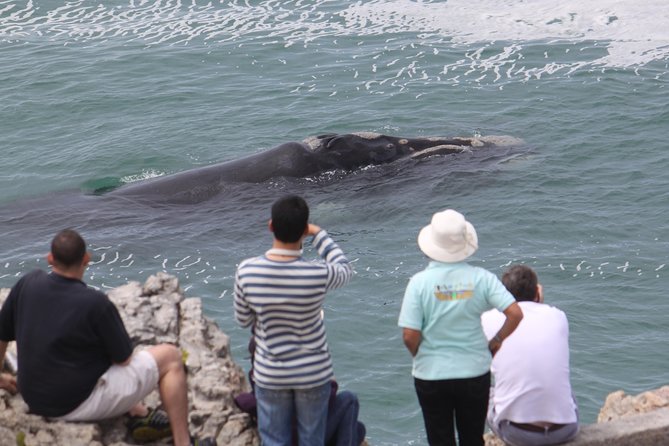
Once the museum part is done, you shift into the main whale-watching phase. The guide takes you to 5–7 different spotting spots, using a private vehicle to move you quickly between areas.
That transport detail is more important than it sounds. Hermanus coastal viewpoints can involve traffic, walking distances, and changing angles. By using an air-conditioned vehicle, you spend less time grinding through transfers and more time at the cliff edges where spotting actually happens.
Then you walk. You’ll explore hidden coves and inlets along paved coastal walkways—exactly the kind of places that can offer better sightlines than a single busy lookout. Walking also gives you flexibility: if the guide spots activity in another direction, the group can reposition efficiently.
Practical note: since the duration is listed as about 2–3 hours total, with time at the museum and time outside, you should expect a steady rhythm—move, stop, scan, listen, repeat. It’s not a slow sightseeing drive; it’s organized around spotting opportunities.
What You’re Actually Learning While You Scan
This isn’t just a “take photos of whales if you see them” tour. The guide’s focus is spotting plus interpretation, with a strong marine-life angle.
You’ll get context about local species such as whales and dolphins, and you’ll also hear about sharks and other marine creatures. That matters because marine activity often shows up as patterns: multiple species interacting in the same area, feeding behavior, and changes in surface activity that you might not recognize without guidance.
What stands out from the tone of the experience is that it’s not stiff. The guide style described for Percy Tours is fun, entertaining, and informative, with enough humor to keep it from becoming a lecture. That kind of energy helps you stay patient during waiting periods, which is usually where people struggle on whale days.
Also, because this is a private tour for your group only, your attention stays on what the guide is pointing out for your exact route. You’re not competing with a large crowd for the best angles or trying to interpret someone else’s spotting strategy.
The Chance to See Whales (Without the Hard Sell)
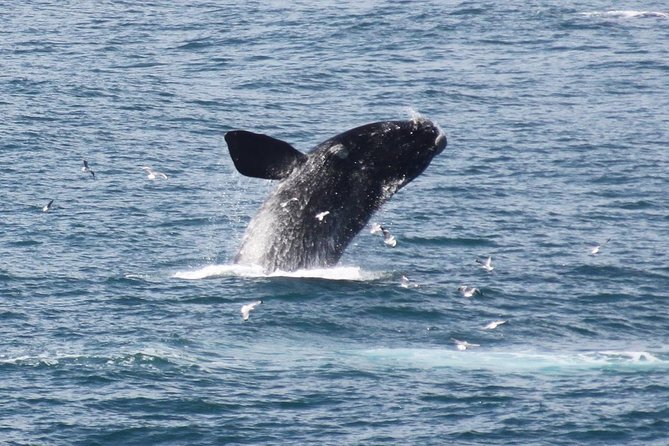
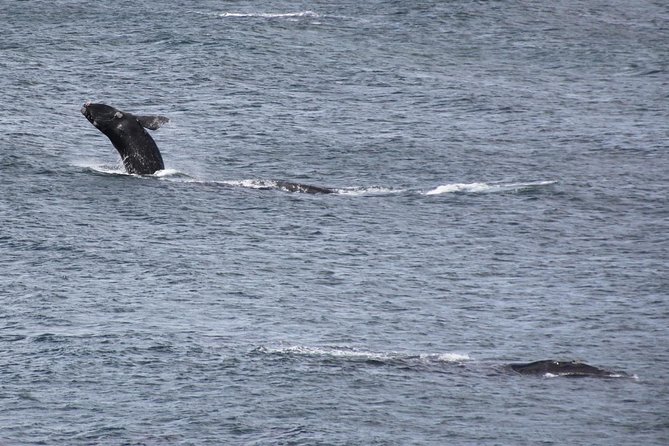
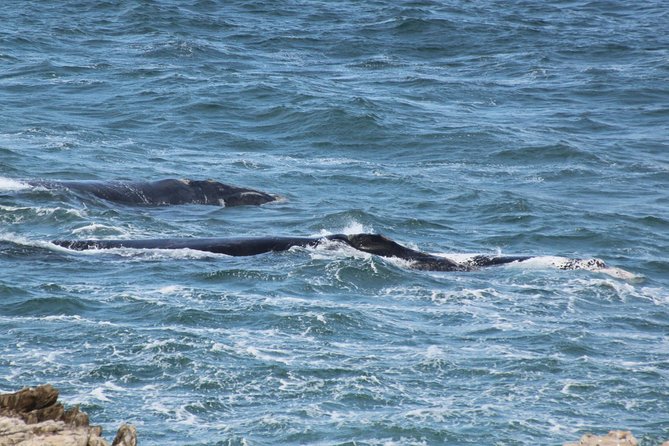
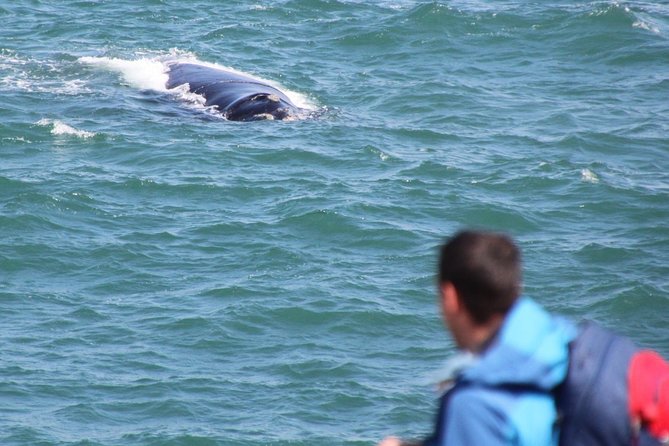
Let’s talk about the honest reality: you’re out in nature. Even when whales are present, sightings can be moment-to-moment. This tour is designed to look out for whales from multiple coastal points where whales have been spotted before, which improves your chances compared with watching from one place.
But you should still plan for the possibility that visibility is limited. Some days whales stay deeper or keep distance, and you may end up with marine viewing without the full show. That’s not a flaw in the tour plan—it’s just how wildlife viewing works.
The upside is that even if you don’t get a long whale sighting, you’re still outdoors in some great coastal scenery, plus you’ve got the museum learning component to anchor the experience. In other words, you’re not paying just for a single animal moment.
And if you are lucky, you can get repeated sightings from different spots along the coastline, which is one of the benefits of this land-based, multi-stop design.
How Long This Takes and How to Plan Your Day
The experience runs about 2 to 3 hours. You should factor in roughly 20 minutes at the Whale House Museum, then the remainder spent walking and watching from several cliff-top viewpoints.
Because it’s scheduled as a daytime activity tied to weather, I suggest building your day with breathing room. If you’re pairing this with other Hermanus plans—dinner reservations, other tours, or a drive—try not to cram it into a tight schedule. Sea conditions can change quickly, and the experience is weather-dependent.
You’ll also want to dress for coastal conditions. Even on mild days, sea breeze can make a cool front feel colder than expected. If you plan to take photos, bring something you can layer quickly—wind can make you feel chilly while you wait at the rail.
Who This Tour Is Best For
This is a great fit if you want whale watching that feels personal and calm. The private nature matters: you’ll get a guide’s undivided attention, and the pace can be adjusted to your group.
It’s also a good option if you prefer a land-based day. You still get the excitement of whale spotting, but without the long boat logistics. The tour is built around coastal walkways and viewpoint angles, which often feels more manageable if you don’t love boat trips.
Family-friendly and most traveler-friendly also seems to be part of the picture, since it notes that most travelers can participate and service animals are allowed. That said, you should be comfortable standing for periods and walking on coastal paths, even if the surfaces are paved.
Finally, it’s ideal for people who love “learn while you look.” If you want your day to include both the beauty of the coastline and real marine-life context, this tour has that built in from the first stop.
Price and Value: What $57.51 Really Buys You
At $57.51 per person, this isn’t a rock-bottom deal, but it also isn’t priced like a luxury private experience. The value comes from the setup:
- You get private guiding rather than a large shared group
- You get museum admission included in the experience
- You get efficient movement to several spotting areas by vehicle
- You get a guided orientation so the time outside feels more productive
A big part of whale watching is waiting. When your guide helps you wait better—by pointing things out, explaining behavior, and steering you toward the next viewpoint—you feel like the day is moving, even when you’re not seeing a whale every minute.
If you’re comparing this to boat-based options, you may find it aligns with a “watch smarter” philosophy: fewer variables (like seasickness or crowded decks) and more direct control of where you stand and what you look for.
Practical Tips for Better Viewing and Better Photos
You’ll get the most out of this tour when you treat it like a guided spotting session, not a casual stroll. Here are the simple things that usually make a difference:
- Arrive ready to stand and scan for short bursts at a time. Spotting isn’t constant; it comes in moments.
- Bring layers. Coastal wind changes fast, especially when you’re parked at cliff edges.
- Don’t just watch the horizon. When a guide points out inlets and coves, follow their instructions on where the movement is likely to show up.
- If your camera has a zoom, test it before you reach the viewpoint so you’re not fumbling while others are scanning.
- Ask questions during the stops. A good guide will help you connect museum learning to what you’re seeing outside.
If you’re with a group, keep your phones and cameras ready but don’t forget the biggest tool: attention. The tour is built on observation, and that’s what turns a good day into a great one.
Final Thoughts: Should You Book This Land-Based Whale Tour?
If you want whale watching that’s calmer, more structured, and more educational, I think you’ll like this one. The combination of Whale House Museum orientation plus multi-stop coastal viewpoints is a strong value play, especially for private tours where you want real guidance rather than competing with the crowd.
Book it if:
- You like personalized guidance and want your guide’s attention focused on your group
- You’d rather stay on land and use coastal walkways for spotting
- You’re interested in learning about whales, dolphins, sharks, and marine life while you watch
Skip it (or plan differently) if:
- You’re only satisfied by guaranteed whale sightings
- You can’t handle weather-related schedule changes, since the experience requires good conditions
Overall, this is the kind of whale-watching day that feels thoughtful: you learn first, you move efficiently, and you spend your time looking from the right angles. That’s a very solid way to do Hermanus.
FAQ
Where does the tour start?
The tour starts at the Whale Museum at 3 Market Square St, Hermanus, 7200, South Africa.
How long is the whale watching walking tour?
It runs about 2 to 3 hours, approximately.
Is this a private tour?
Yes. It’s a private tour/activity with only your group participating.
Do you get pickup?
Pickup is offered.
What’s included with the tour besides the coastal walking?
Admission to The Whale House Museum is included.
How many coastal spots do you visit?
The guide takes you to 5–7 different spots.
Are whales guaranteed to be seen?
The tour visits places where whales have been spotted before, but sightings depend on conditions and what animals are doing during your visit.
Does the tour require good weather?
Yes. The experience requires good weather, and if it’s canceled due to poor weather you’ll be offered a different date or a full refund.
What is the cancellation window?
You can cancel up to 24 hours in advance for a full refund.
Are there any limits on who can participate?
Most travelers can participate, and service animals are allowed. Confirmation is received at the time of booking.