REVIEW · NEWCASTLE
Port Stephens: Whale Watching Cruise
Book on Viator →Operated by Moonshadow - TQC Cruises · Bookable on Viator
Humpbacks swim close to shore in winter. This Port Stephens whale watching cruise is interesting because it pairs a relaxed catamaran ride with live onboard commentary that helps you know what you are actually looking at. I like that the boats are built for viewing, with deck space and sheltered spots, so you are not stuck in one spot the whole time.
The main thing to consider is that whale watching is weather-and-location dependent. Even in good conditions, you can spend a lot of the 2.5-hour cruise scanning for blows and movement, and it is an ocean-going trip where motion can bother some people.
In This Review
- Key reasons to go
- Why May to November whale season is the whole story
- Getting on board at Nelson Bay’s D’Albora Marina (and picking the right time)
- Hinchinbrook Explorer vs MV Spirit: which boat fits your style?
- What you actually do for 2 hours 30 minutes at sea
- How to spot humpbacks faster (and get better photos)
- Comfort on the water: what to wear and how to stay steady
- Live commentary: why it changes the whole experience
- Value check: is $54.24 worth it?
- Who this cruise is best for (and who should rethink it)
- Should you book Port Stephens whale watching with Moonshadow?
- FAQ
- When is the Port Stephens whale watching season?
- How long is the cruise?
- What departure times are available?
- What is included in the ticket price?
- What if the weather is poor on the day?
- Are baby prams and strollers allowed on board?
Key reasons to go
- Live commentary helps you track humpbacks, not just hope for them
- Viewing everywhere on the catamarans means you can switch sides and angles
- Two vessel options (larger and more spread-out, or smaller and more intimate) for different departures
- Good photo opportunities when whales surface, breach, and tail-flip
- Max 150 travelers keeps it more manageable than packed tour buses on land
Why May to November whale season is the whole story
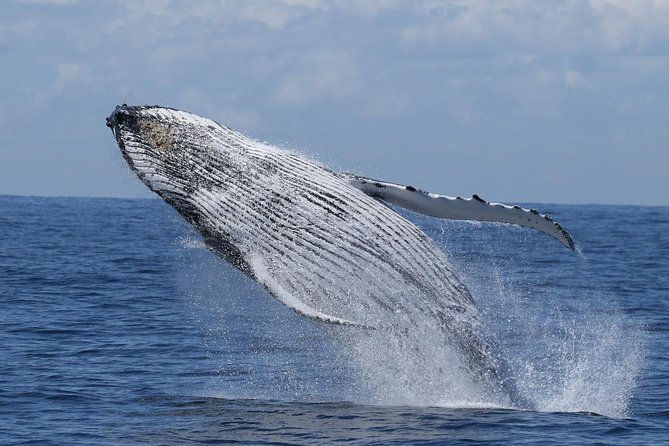
Port Stephens is at its best for whale watching between May and November, when humpbacks migrate along the coastline. The cruise is timed for that window, so you are not doing a random “maybe whales” outing. You are doing a focused trip built around the seasonal movement of the animals.
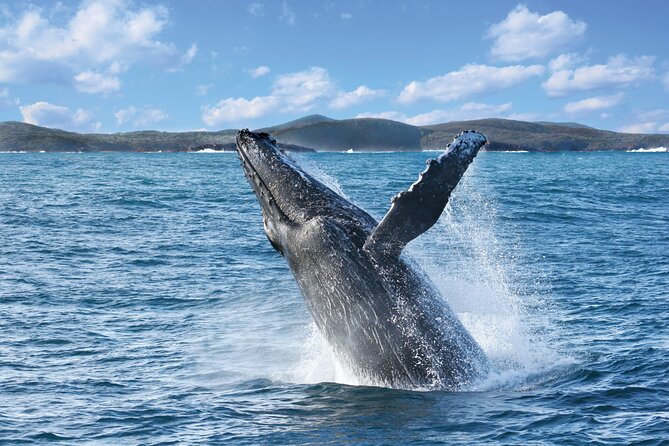
Humpback sightings here tend to be classic behaviors: you might see a whale roll at the surface, hear the slap as it moves, or watch a breach if you are in the right spot. You may also see dolphins in the same general area, which is a nice bonus because it means even if the whales are a little quieter at first, you still have marine life moving nearby.
One practical note: the experience is also only as good as the day on the water. The operator flags that the cruise depends on favorable weather and sea conditions, and if conditions are poor, they will offer an alternative date or a full refund.
You can also read our reviews of more tours and experiences in Newcastle.
Getting on board at Nelson Bay’s D’Albora Marina (and picking the right time)
Your cruise starts at Moonshadow – TQC Cruises Boarding Dock C at D’Albora Marina in Nelson Bay (NSW 2315). This is convenient because you are right in the Nelson Bay area, and the experience is noted as near public transportation. If you like arriving early, aim to show up with enough time to get settled before you push out.
You also get real scheduling flexibility. During whale season, you can choose:
- Morning at 10:00am and an afternoon departure at 1:30pm (on the larger catamaran option)
- A 11:00am departure on a smaller, more intimate catamaran option
Plus, there can be extra cruises during NSW school holidays.
That matters because you can match the cruise to your energy level. If you are the type who wants the day to open up after the boat ride, the afternoon slot can be great. If you prefer to see whales first and then explore on land while the light is still good, the morning departure is the better fit.
Hinchinbrook Explorer vs MV Spirit: which boat fits your style?
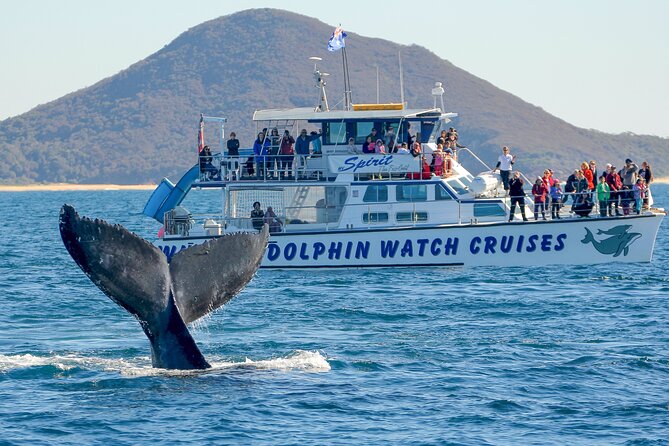
There are two catamarans you might ride, and the difference is not just size—it changes how your viewing feels.
Hinchinbrook Explorer (about 30 meters / 100 feet)
This option is larger, with full walk-around decks for viewing. It also has large air-conditioned indoor areas, which is a big deal when the weather shifts. If you like to move quickly when you see a spout, this boat’s layout makes it easier to get the angle you want.
MV Spirit (about 18 meters)
This one is smaller and more intimate. You may feel like you are closer to the action simply because you are not spread out as much across the vessel. If you dislike big crowds and prefer a tighter boat vibe, this option can feel more comfortable.
Both are catamarans, and both are designed for ocean cruising. The operator notes that it is an ocean-going cruise, so plan as if you might be on moving water for the full time.
What you actually do for 2 hours 30 minutes at sea
You are on the water for about 2 hours 30 minutes, and most of that time is focused on one job: finding humpbacks. That sounds simple, but it is the difference between an okay tour and a standout one.
You will cruise out looking for migrating whales off the coast of Port Stephens. When whales show up, the crew and guide commentary help you interpret the behavior—so you are not just seeing a dark shape briefly, you are understanding what is happening when it surfaces. The goal is to maximize your chances, and the vessel stops for an appropriate amount of time when whales are in view, which gives you more than a drive-by glimpse.
You should also keep your eyes open for other marine life. Dolphins can often be seen in the same area, and you may spot seals and birds depending on the day’s activity. That is not guaranteed every trip, but the chance is real, and it makes the cruise feel alive even if whale sightings come in waves rather than all at once.
A key expectation-setting point: if you are hoping for back-to-back whales from start to finish, this may not always happen. The best tours still include a scanning phase. If you come prepared to watch the water for movement and sound cues, the time passes more pleasantly.
How to spot humpbacks faster (and get better photos)
Humpback whale viewing is very much a “timing and technique” game. Here is what helps, and it lines up with what the live commentary is there for.
First, watch for the telltale sign: a blow/spout. The whales do not stay visible, so you learn to track where the action is before it becomes obvious. Once you spot activity, shift your attention to behavior—rolling at the surface, slapping movement, or tail flicks are often what make a sighting feel unforgettable.
Second, use the boat layout. If your departure uses a vessel with walk-around decks, you can move to switch sides and improve your viewing angle. Even on days when whales are far, a small change in position can turn a distant silhouette into a clearer photo.
Third, plan your camera like you are shooting bursts, not single shots. When whales surface, they may do it fast—breaches and repeated surfacing can give you multiple chances in a short window. Reviews highlight good opportunities for photographs and video, especially when sightings include breaching and visible blows.
Finally, remember that dolphins can pop up too. When you see dolphins moving in pods nearby, keep your attention balanced—sometimes they change the pace of the viewing day by bringing more frequent action than the whales do early on.
Comfort on the water: what to wear and how to stay steady
This is an ocean-going cruise, so your comfort matters more than most short tours. The operator recommends comfortable casual clothing and footwear. Bring sunglasses, a hat, and sun cream because you are exposed when you are on deck. You also want a camera ready, since the best moments happen fast.
For clothing, the advice includes dressing warmer in winter months. Even if the air looks fine at the marina, conditions can feel cooler out on the water, especially with wind. If you tend to get chilly easily, pack a light layer you can wear without thinking.
Now the motion question. If you or anyone in your party feels motion sickness, the guidance is to consult your pharmacist about seasickness medication. It is smart to do that before you are already on a moving vessel. If you know you get queasy on boats, this cruise is still possible, but you should prepare.
One more practical comfort rule: baby prams are not permitted on board. Collapsible strollers are permitted, but they cannot be taken to areas other than the main cabin of the vessel, and crew will direct you to the storage spot at boarding. If you are traveling with small kids, plan around that so you are not stuck in the awkward stage of deciding where to put gear once you arrive.
Live commentary: why it changes the whole experience
The price includes live commentary on board, and that is not a small perk. On whale cruises, the difference between a forgettable trip and a memorable one is often understanding what you are seeing at the moment you see it.
The commentary helps you identify whale behavior and guide your attention to where activity is happening. That matters because humpbacks can surface, disappear, and reappear quickly, and your eyes can miss the pattern if you are just guessing.
When the whales show surface behavior like breaching, blowing, slapping, or rolling, commentary makes those moments more than a random thrill. You know what the actions mean and how to keep tracking the whale’s movements instead of starting over each time it submerges.
It also helps with the broader “marine life” feel of the day. Even if humpbacks are a bit spaced out, commentary that explains what you are seeing in the surrounding waters can keep the experience interesting and help you notice dolphins, seals, and birds more clearly.
Value check: is $54.24 worth it?
At $54.24 per person, this cruise sits in the category of a practical, not-too-expensive day on the water. The big value points are what you get for that money: the cruise itself runs about 2 hours 30 minutes, and it includes GST plus live commentary. Alcoholic drinks are extra, but non-alcoholic options and basic onboard refreshments are typically what you can expect on a tour like this, and you can purchase drinks if you want.
So the “value” question comes down to your priorities:
- If you want a guided chance at migrating humpback whales, the included commentary makes the time more productive.
- If you want a comfortable boat ride with viewing options, the catamaran design helps you use the whole cruise time, not just one sheltered spot.
- If you mainly want instant gratification, whale watching will always involve some waiting and scanning. The tour can still be worth it, but you have to accept that wildlife has its own schedule.
Also, the group size helps. The experience caps at 150 travelers, which is large enough for a lively cruise but small enough that you typically are not fighting for space to see.
Who this cruise is best for (and who should rethink it)
I think this is a great choice if you:
- love wildlife and enjoy learning while you watch
- want a structured tour rather than trying to figure whale spotting out on your own
- appreciate comfort options like indoor air conditioning and open viewing decks
- travel at times when you can match your schedule to morning or afternoon departures
It can be less ideal if:
- you get motion sick easily and have not planned for it
- you expect whales to be guaranteed within the first minutes
- you need a pram-friendly setup (because baby prams are not permitted)
If you are traveling with kids, the cruise notes that children must be accompanied by an adult. The viewing is active, and that can be fun for families who can handle boat time and weather changes.
If you are a solo traveler, this kind of tour can still work well because you are on a guided route with a shared focus. If you are a couple, the viewing experience feels special without requiring you to plan every detail beyond picking a departure time.
Should you book Port Stephens whale watching with Moonshadow?
Book it if you want a well-paced, guided way to chase migrating humpbacks off Port Stephens. The biggest reasons are the live commentary, the comfortable catamaran setup, and the clear season focus from May to November. You also get multiple departure times, so you can fit it around the rest of your Nelson Bay day.
Consider holding off (or choosing medication and layers carefully) if you are sensitive to sea motion or you know you struggle with waiting. Whale sightings depend on conditions and where the whales are in their migration, and that means some scanning time is part of the deal.
If you want the simplest decision rule, use this: if you are excited by the chance to see breaching, blowing, slapping, or rolling humpbacks—and you are ready to watch the water for a while—this cruise is a strong choice.
FAQ
When is the Port Stephens whale watching season?
The tour runs during May to November, when humpback whales migrate off the coast of Port Stephens.
How long is the cruise?
It lasts about 2 hours 30 minutes.
What departure times are available?
During whale watching season you can choose departures at 10:00am and 1:30pm daily on the larger Hinchinbrook Explorer option, and a 11:00am daily departure on the MV Spirit option. There may also be additional cruises during NSW School Holidays.
What is included in the ticket price?
Your ticket includes GST and live onboard commentary. Alcoholic drinks are not included and can be purchased onboard.
What if the weather is poor on the day?
The cruise requires favorable weather and sea conditions. If it is canceled due to poor sea conditions, you will be offered an alternative date or a full refund.
Are baby prams and strollers allowed on board?
Baby prams are not permitted on board. Collapsible strollers are permitted, but they cannot be taken to areas other than the main cabin, and crew will advise you where to store them.