REVIEW · ISAFJORDUR
Westfjords Whale Watching
Book on Viator →Operated by Sjóferðir · Bookable on Viator
One turn of the fjord wheel and you’re in whale country. I like the mix of expert-led spotting and the chance to see humpbacks up close in the Ísafjarðardjúp feeding area, and I also like how the captain steers for the whales, not the other way around. The main drawback is simple: you’re out at sea, so dress for cold wind and rougher water.
This is a tight, 3-hour outing that stays focused on getting you to the action quickly, with a small group size capped at 48. You’ll ride from the harbor with plenty of viewing time, and the crew tends to keep circling the best area while you watch. If you’re the type who hates waiting for animals to show up, go in with patient expectations.
In This Review
- Key Highlights You’ll Care About
- Ísafjörður Whale Watching: Why This Spot Works in the Westfjords
- Meeting Point to Harbor: Getting Started Without the Fuss
- Boarding the Vessel: What Comfort Looks Like When the Deck Is the View
- Stop 1 at Ísafjarðardjúp: How the Cruise Turns Into Whale Watching
- The Crew Factor: Tom, Chloe, and the Specialist Difference
- Respectful Viewing That Still Gets You Close
- Expect Arctic Conditions: What to Wear (and What to Plan For)
- How Long Is Enough Time? Timing and What 3 Hours Really Feels Like
- Price and Value: What $113.68 Buys You
- Who Should Book This Whale-Watching Trip
- Should You Book Westfjords Whale Watching?
- FAQ
- What’s the duration of the Westfjords Whale Watching tour?
- Where does the tour start in Ísafjörður?
- What’s included on board?
- Is the tour offered in English?
- Do I need good weather for this experience?
- What’s the whale-watching success like for humpbacks?
- How many people are on the boat?
Key Highlights You’ll Care About
- Small-group feel (max 48 passengers) with repeated checks around the whale area
- Expert talk during the cruise, including marine specialist-style commentary and whale ID tips
- Respectful whale viewing, including letting whales come to you instead of chasing
- Humpbacks are the headline, with 2023 noting a 100% chance of seeing humpbacks
- Warmth and comfort on board, including restroom access and air-conditioned travel support
Ísafjörður Whale Watching: Why This Spot Works in the Westfjords
The Westfjords aren’t a theme park version of nature. They’re cold, real, and dramatic—so it helps that this tour is built around the local rhythms of marine life. Ísafjörður sits in a landscape where fjords funnel movement, birds patrol from above, and whales show up where food is thick.
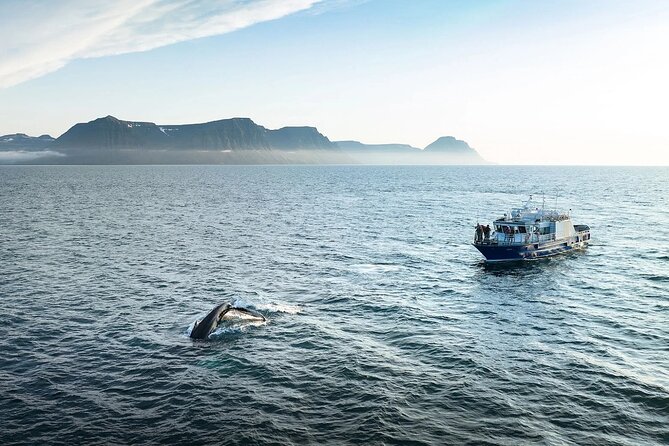
What makes this excursion particularly appealing is that the boat time isn’t wasted. You head out from the harbor and spend meaningful stretches watching for the blow-and-tail sequence that tells you humpbacks are feeding. On top of that, the crew communicates what to look for and why the birds and surface behavior matter, which turns a simple boat ride into an actual wildlife hunt—just one where the guide does the hard work.
And if you’re chasing value, this is one of the few whale tours that leans into education and respectful viewing instead of speed and spectacle. You get the feeling that the goal is: find the whales, watch them calmly, and keep you informed while nature does its thing.
Meeting Point to Harbor: Getting Started Without the Fuss
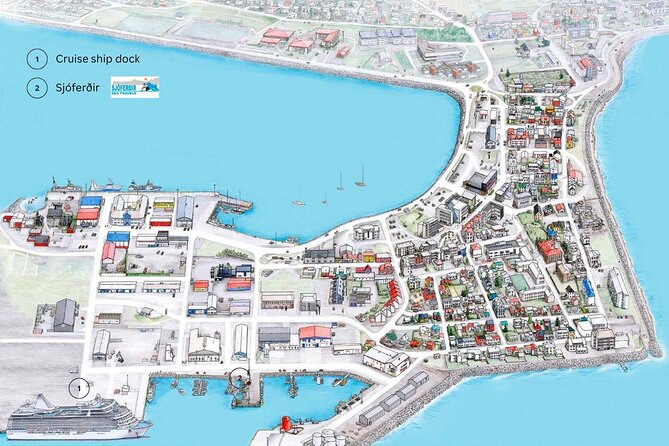
The meeting point is Sjóferðir Ásgeirsgata, 400 Ísafjörður, Iceland. The good news for most people is that it’s easy to reach once you’re in town, and it’s listed as near public transportation. If you’re on a cruise schedule, you’ll probably appreciate that you’re not looking at a long cross-country transfer.
The tour includes an air-conditioned vehicle, which matters more than you might think on a cold day. Even if the water itself is the main event, getting to the dock in comfort makes the whole outing feel smoother. There’s also a restroom on board, which is a quiet quality-of-life detail when you’re spending hours in sea air and heavy layers.
One more practical point: this is a mobile ticket experience. Have your ticket ready on your phone so you can move fast when you arrive.
Boarding the Vessel: What Comfort Looks Like When the Deck Is the View
This boat setup is built for viewing. That shows up in small details like access to open deck space when conditions allow, and in how the crew manages passenger flow so you can get to the best sightlines quickly.
Comfort is handled in two ways:
- On-board basics like a restroom and onboard space you can use during choppy moments
- Warmth support, since blankets were provided in at least one account of the ride, and it’s clear the company expects cold wind as normal
The group size limit—up to 48—helps a lot. You’re not shoulder-to-shoulder with strangers for hours. It’s still a boat, so you’ll want to dress smart, but you’re not packed like a sardine.
Stop 1 at Ísafjarðardjúp: How the Cruise Turns Into Whale Watching
The itinerary centers on Ísafjarðardjúp, the fjord area where you’re most likely to find active feeding behavior. The experience starts with you leaving the harbor and gliding across the fjord surface. As you go, you’ll be watching for seabirds and surface tells—those quick cues that marine life is nearby.
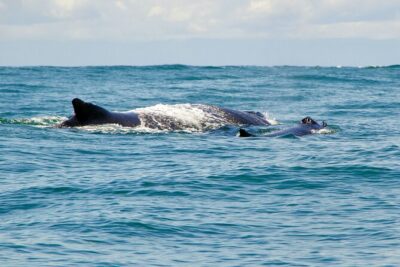
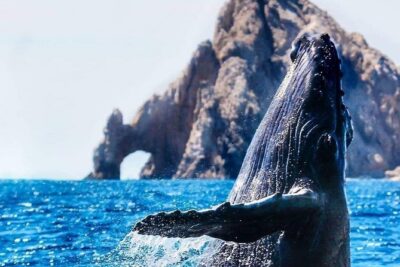
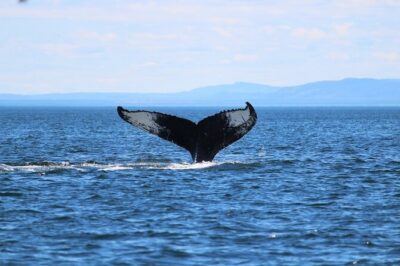
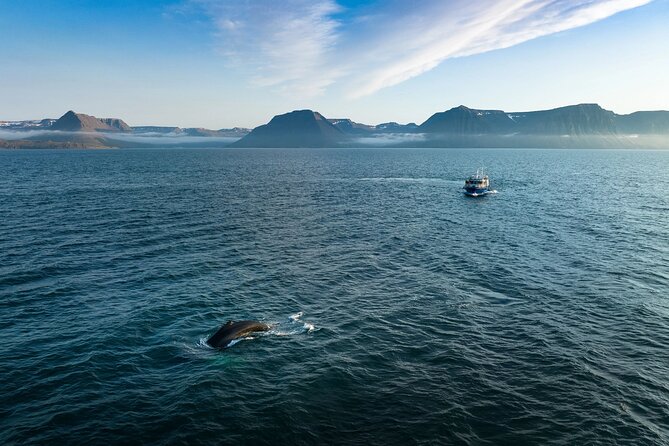
Once the captain locates the right zone, the tour becomes all about sustained viewing. That’s the difference between a quick “we passed by” sighting and the kind of time you need to see full behavior cycles. In many accounts, the tour stayed in a whale-feeding area for about an hour, which is exactly the length of time it takes for humpbacks to give you multiple looks: surfacing, breathing, diving, and the showy tail-and-fluke moments people remember.
Here’s what that can look like in practice:
- Humpbacks appearing close enough to feel like you’re right in the action
- Dolphins and other marine life sometimes joining the scene
- Repeated sightings as the crew checks the area instead of moving on too quickly
It’s also worth noting that the experience isn’t pretending every day is the same. The tour depends on whale presence and conditions. Still, there’s a strong track record noted for humpbacks, including a stated 100% chance of seeing humpback whales in 2023.
The Crew Factor: Tom, Chloe, and the Specialist Difference
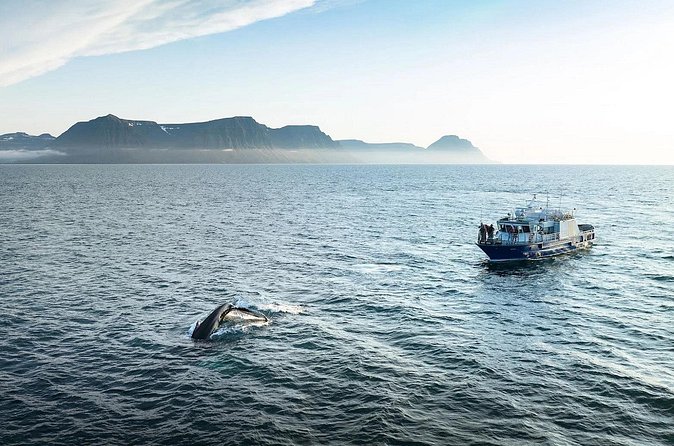
The standout pattern in the experience is the guiding style. People consistently mention guides like Tom, along with specialists such as Chloe and marine biologist–type hosts. The common thread: they don’t just point and whisper. They explain what you’re seeing and why it’s happening.
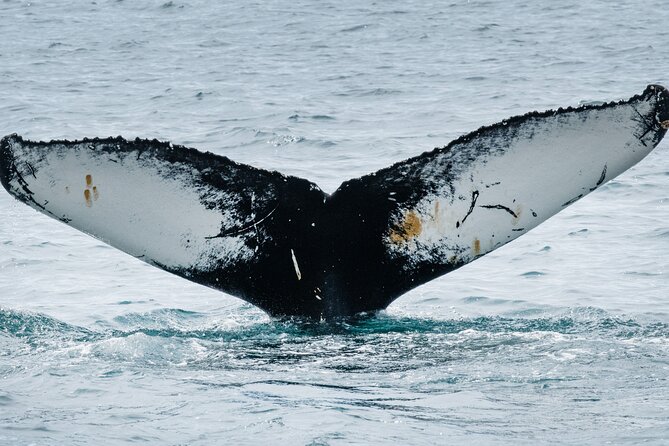
This matters because whale watching isn’t only about sightings. It’s about interpretation. When you understand what a tail-up moment means, or how humpback tail patterns can be used for identification, your eyes get sharper. One account highlights that guides even helped identify whales by their recurring look—tail patterns function like fingerprints.
Another key detail: research involvement. Several accounts mention crew members documenting whales for research purposes, and one notes that part of each trip’s earnings is donated into a whale research fund. Even if you don’t care about the science, you should care about the attitude it creates: careful, patient, and focused on not causing extra stress.
Respectful Viewing That Still Gets You Close
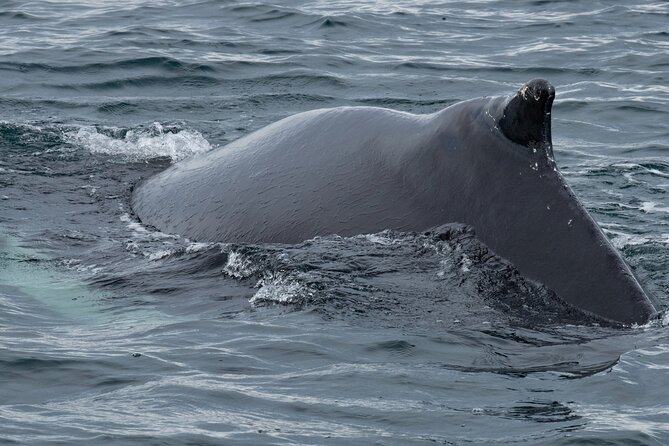
A lot of whale tours get one thing right and the other wrong. This one aims for the sweet spot: respect the whales, but give you great views.
You can feel the difference in how the captain drives the encounter. Multiple accounts describe the approach as respectful and non-chasing. One account specifically says the captain turned off the engine to let whales come closer, which is the kind of tactic that reduces disturbance and also improves the viewing experience. When the boat isn’t blasting through, you get more time for whales to behave naturally around you.
That’s also why you can end up seeing behavior like:
- whales swimming right up to the boat
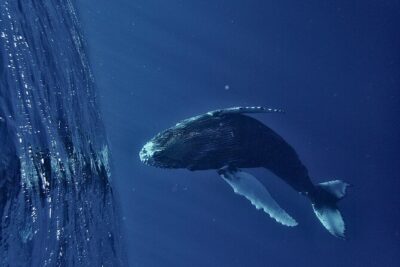
- whales passing underneath the vessel
- repeated surface events and close-range moments
A practical takeaway: when conditions are rough, hold on tight and stay seated when asked. That’s not just safety—it also helps you keep your place while the crew positions you for the next sighting.
Expect Arctic Conditions: What to Wear (and What to Plan For)
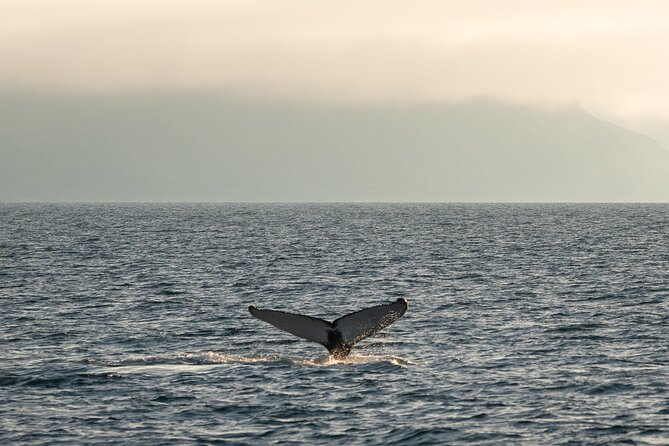
This is the part that can make or break your day, because the Westfjords don’t care about your plans.
From accounts of the experience, you should assume:
- You’ll be cold, even if you’re excited
- You may get wet, especially if waves slap the hull
- Seas can get rough, so motion can hit hard
So plan like a pro:
- Wear warm layers you can move in
- Use waterproof outerwear if you have it
- Consider seasickness help ahead of time if you’re prone to motion sickness
- Bring water (one account explicitly suggests it)
You’ll also want gloves and a hat. Wind on the deck can turn a quick spray into a full-blown chill.
How Long Is Enough Time? Timing and What 3 Hours Really Feels Like
The tour runs about 3 hours. In the real world, that’s a balanced length: enough time to locate whales, settle into a feeding zone, and get multiple sightings. It’s also short enough that you don’t burn your whole day if you’re hopping between Westfjords stops.
You board, you travel out, you watch and learn, then you return to the meeting point. For day-trippers, the timing usually lines up well with a continued day exploring Ísafjörður, plus you can still plan dinner without rushing.
Price and Value: What $113.68 Buys You
At $113.68 per person, you’re paying for a few things at once:
- time on the water in a whale-frequent fjord
- a crew that actively searches and stays with the best area
- interpretation from guides and specialists
- comfort basics on board, plus air-conditioned travel support
Compared with cheap tours that mainly market the idea of whales, the value here is in the how: repeated time in the whale zone, explanation during the trip, and a respectful approach that keeps viewing enjoyable instead of chaotic.
Could you pay less elsewhere? Maybe. But whale watching isn’t just tickets—it’s effort, sea miles, and skilled spotting. When the experience includes real-time whale ID talk and a research-minded attitude, that’s where your money tends to translate into lasting memories and better photos (or at least better odds of getting the moment you came for).
Who Should Book This Whale-Watching Trip
You’ll likely love it if you:
- want a focused wildlife outing rather than a long bus-and-brief-water-tour day
- enjoy learning while you watch, especially with marine specialty explanations
- care about respectful wildlife viewing and not turning whales into a chase scene
- are traveling to Ísafjörður and want a high-impact activity nearby
It’s also a good fit for cruise passengers, since the meeting point is close to the cruise terminal area in at least one account, with pickup/walk reported around 15 minutes.
If you hate being out in windy, cold conditions or you’re very prone to seasickness, you can still go—but you should take clothing and motion plans seriously.
Should You Book Westfjords Whale Watching?
If you’re aiming for humpback country in the Westfjords, this tour earns a strong recommendation. The biggest reasons are practical: the crew works hard to find whales, you stay in the right zone long enough to see real behavior, and the guiding adds meaning instead of just narration.
Book it if you can dress for cold and accept that wildlife timing is part of the deal. Skip it only if you know you won’t handle moving water, or if your day can’t absorb weather-related changes.
Bottom line: this is a thoughtful whale-watching outing built for people who want whales, not distractions.
FAQ
What’s the duration of the Westfjords Whale Watching tour?
It runs about 3 hours (approx.).
Where does the tour start in Ísafjörður?
You meet at Sjóferðir Ásgeirsgata, 400 Ísafjörður, Iceland.
What’s included on board?
The tour includes a restroom on board.
Is the tour offered in English?
Yes, it’s offered in English.
Do I need good weather for this experience?
Yes. The experience requires good weather, and if it’s canceled due to poor weather, you’ll be offered another date or a full refund.
What’s the whale-watching success like for humpbacks?
In 2023, there was a stated 100% chance of seeing humpback whales.
How many people are on the boat?
The tour has a maximum of 48 travelers.