REVIEW · TROMSO
From Tromso: Whale Watching in Magic Skjervoy
Book on GetYourGuide →Operated by Green Gold of Norway AS · Bookable on GetYourGuide
Orcas can show up fast. I like the small RIB setup (4-12 people) and the fact you’re fully geared with warm flotation suits before heading out for 2.5–3 hours of winter whale watching. The drawback is simple: it’s a 12-hour, early-morning day on chilly, sometimes bumpy water.
Once you’re in Skjervøy, the team moves fast so you can spend more time on the fjord and less time waiting around. And I like that the guides keep the experience grounded in wildlife behavior, not just chasing the action.
This runs in the heart of the Arctic winter season, when the whales are out for herring. If you want a close-up, weather-built adventure that feels real, this is the kind of tour that delivers.
In This Review
- Key things I’d bank on before you go
- Tromsø departure at 5:20 am: your warm-up before the whales
- The drive to Skjervøy: comfort on the way, and the few things to plan
- Suit-up in Skjervøy: how the gear keeps you in the moment
- RIB whale watching for 2.5–3 hours: small groups, fast water, real motion
- What you can see in Skjervøy: orcas, humpbacks, and herring chaos
- Wildlife space and boat behavior: why the rules matter on a RIB
- Guides on board (and why their names keep showing up)
- After the water: clubhouse warmth, baguettes, and photos to take home
- Price and value: $356 for a full day built around gear + transport + time on the water
- Who should book this (and who should skip it)
- My practical checklist so you don’t regret anything
- Should you book Magic Skjervoy whale watching with Green Gold of Norway?
- FAQ
- Where is the meeting point in Tromsø?
- What time do I need to be there?
- How long is the boat time for whale watching?
- What’s included for warmth and safety during the boat ride?
- What food and drinks are included?
- Who is the tour not suitable for?
Key things I’d bank on before you go
- Small RIB boat time: 2.5–3 hours on the water with 4–12 people aboard
- Warm gear does the heavy lifting: flotation suits plus boots, goggles, mittens, and face protection
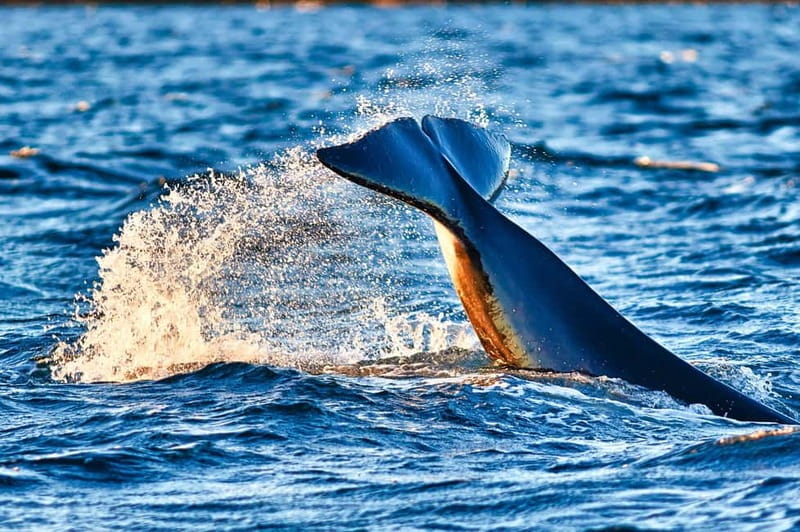
- Winter herring season: orcas and humpbacks are chasing shoals in the Skjervøy fjords (Oct–late Jan)
- Wildlife-following guides: English-speaking team with over 10 years in whale watching
- You get fed and warmed up after: hot drinks and baguettes in a cozy clubhouse
- Camera-friendly but not perfect: limited movement and small space mean you plan how you shoot
Tromsø departure at 5:20 am: your warm-up before the whales
Your day starts at Prostnestet Bus Terminal in Tromsø, ground floor behind the Magic Ice bar. You’re asked to arrive by 05:20 because the departure is 05:30, and the rest is timed to get you to Skjervøy before the best sightings window slips by.
The meeting point is easy to miss if you wander. Go straight inside the big red bus from Bussring/Arctic Route, and double-check with the driver. This is one of those tours where being early matters more than being fancy.
Bring your “real clothes” under the provided gear. Think layers you can tolerate for hours in Arctic air. Then add your outer thermal system when it’s time to suit up.
You can also read our reviews of more tours and experiences in Tromso.
The drive to Skjervøy: comfort on the way, and the few things to plan
The round trip is long, and the bus leg is part of the total experience. You’re looking at roughly a 12-hour day overall, with the drive to Skjervøy taking about 3.5 hours each way in practical terms.
Onboard, people report the bus is comfortable, with toilets and helpful extras like WiFi and USB outlets. That’s a big deal when you want your phone charged for photos and video before you’re bouncing around on a RIB.
One small practical heads-up: water isn’t always available on the bus. I’d pack a bottle if you tend to get thirsty early, and I’d keep snacks minimal since the day is still cold and busy.
Suit-up in Skjervøy: how the gear keeps you in the moment
When you arrive, the goal is quick changes and fast time on the water. You’ll be given warm flotation suits, mittens, balaclavas, waterproof boots, and ski goggles. There’s also a warm, changing-room setup to help you get organized.
This is where the tour earns its price. Cold water doesn’t care about good intentions, and the right gear means you can focus on whales instead of shivering. Several people also note you’ll want more warm layers than you think under the suit.
The tour encourages you to take as many warm and waterproof clothes as you can for under the flotation suit, and to bring an extra set of clothes to change into afterward. That’s not overkill. Even with good suits, spray and damp can happen, especially with a fast RIB and real Arctic sea conditions.
RIB whale watching for 2.5–3 hours: small groups, fast water, real motion
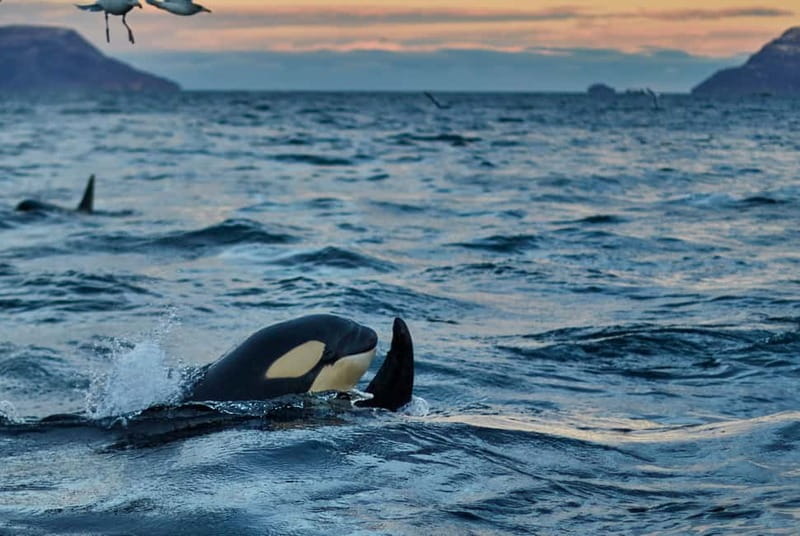
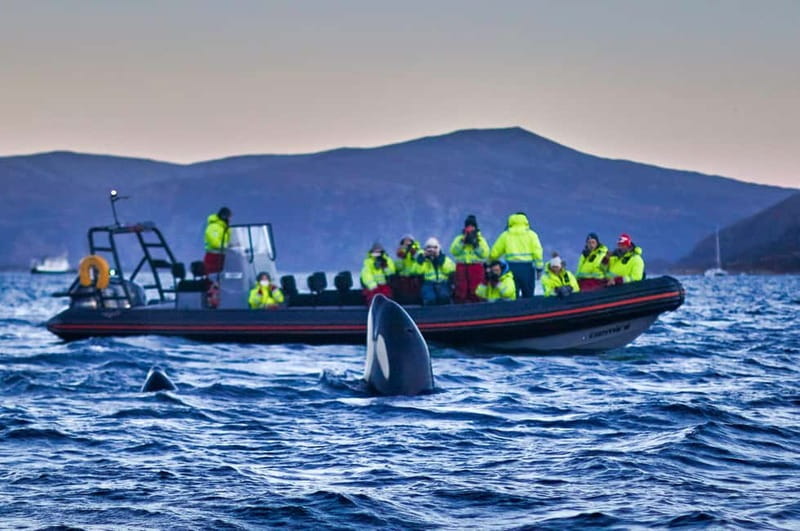
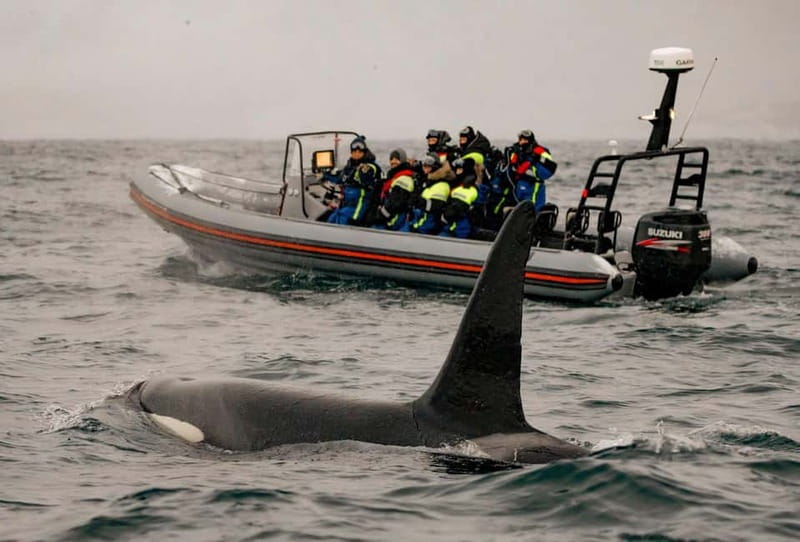
This is the heart of the trip: a rigid-inflatable boat experience for 2.5–3 hours on the fjord. The boat runs with a high level of safety and confidence, and it’s designed for that “close to the whales” feel.
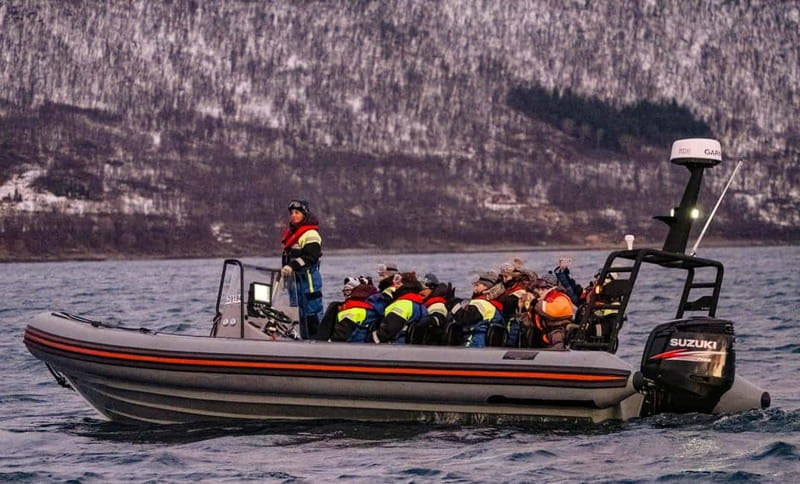
The big practical advantage is group size. With no more than 12 people (and sometimes closer to the smaller end), you’re not packed shoulder-to-shoulder. You get better viewing angles, and the guides can help position people when the action shifts.
The trade-off is how the RIB rides. Expect speed, wind, and bumps over waves. People describe the ride as rough at times, and they also point out that it’s not for the faint-hearted if you get seasick easily.
If you’re planning camera gear, know that the boat setup can limit movement. There’s limited space and seats reduce how freely you turn. A versatile zoom range like a 24–105mm is described as ample by at least one guest, while larger prime telephoto lenses may need planning with the company. And yes, you should protect your phone and camera from getting wet—use a cover or bag.
One more detail: the boat may stop during sightings so you can actually watch and film without constant bouncing. When orcas or humpbacks are active, that pause is when the experience really clicks.
What you can see in Skjervøy: orcas, humpbacks, and herring chaos
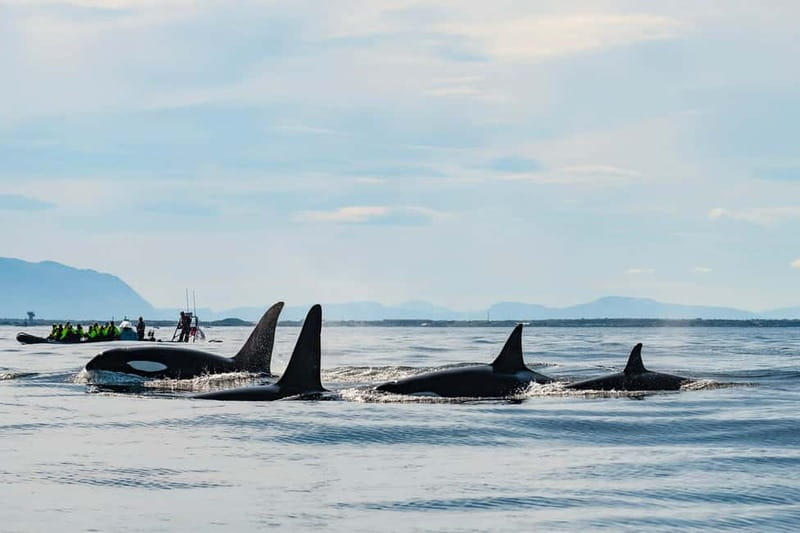
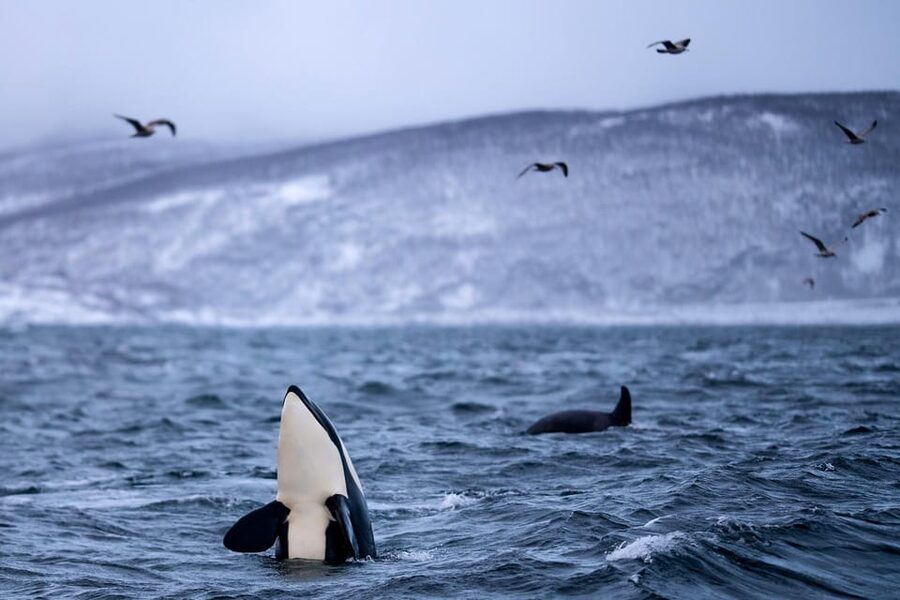
The concept is simple and powerful: during winter migration, orcas, humpbacks, and other cetaceans feed on herring in the Skjervøy area. Between October and late January, the fjord water can become a moving stage as pods hunt and chase shoals.
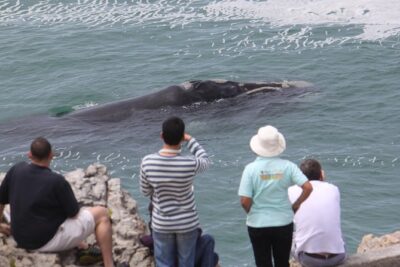
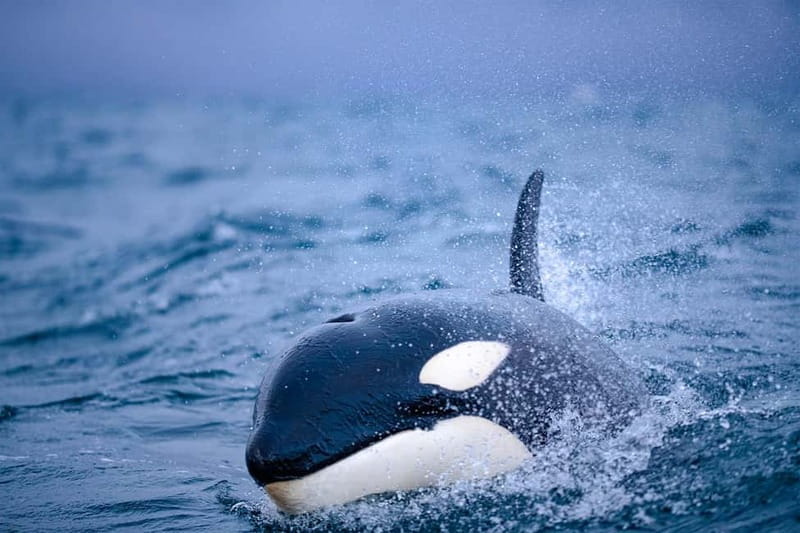
Orcas are the headline. People report many sightings, often in pods, with close approaches at times. I’d treat that as a possibility, not a guarantee. Nature sets the schedule, not the itinerary.
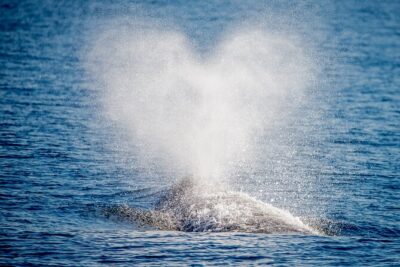
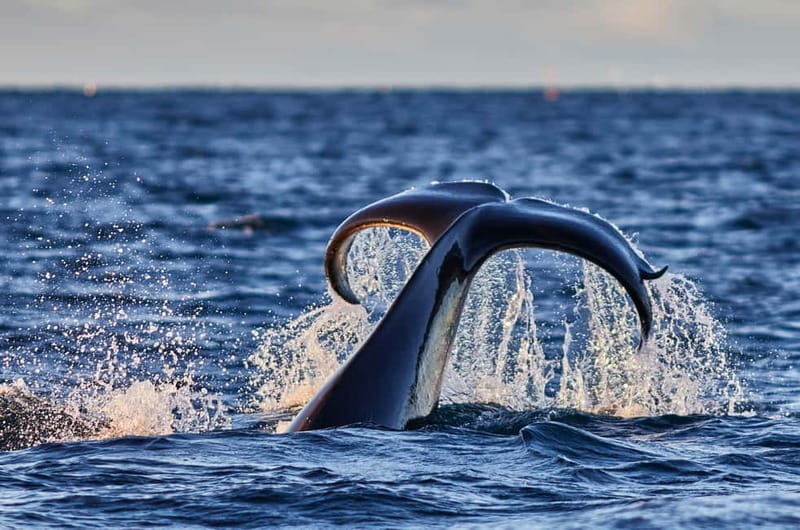
Humpbacks are the second star. Guests describe multiple humpbacks seen, and sometimes they’re close enough that you’re watching their feeding behavior rather than just spotting a spout in the distance. Fin whales are also reported in the mix, and at least one guest mentions seeing fin whales plus other species in the same region.
The most memorable moments tend to be feeding activity—when orcas and humpbacks are working the herring at the same time. Several people describe moments that feel like a full Arctic buffet, not a single random sighting.


Wildlife space and boat behavior: why the rules matter on a RIB
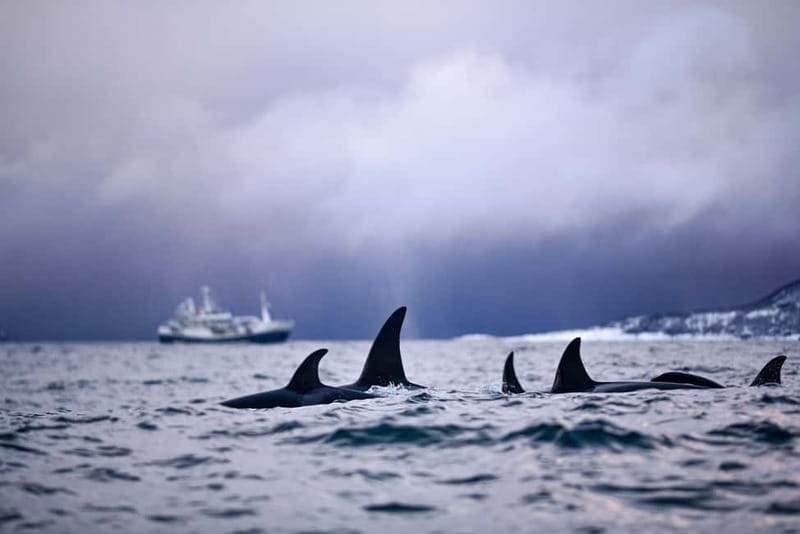
When you’re in a small RIB close to big animals, it’s easy to forget that the whales are doing their own thing. The best operator mindset is respecting animal space and following the approach rules, even when the urge is to get closer for a cleaner shot.
Some feedback highlights that the team follows the rules and keeps health and distance in mind, even when other boats might take a different approach. That’s exactly what you want to see on a whale-watching day. The closer you stay, the more you risk stressing wildlife and breaking best practices.
So your job is mostly easy: listen to the guide, stay seated when asked, and don’t try to “lean out for one more frame.” The whales decide how long the moment lasts. The crew just helps you catch it without turning it into a mess.
Guides on board (and why their names keep showing up)
This tour runs with an English-speaking team and professional experience in whale watching. You may be guided by people with names like Kristina, Bridget, Christina, Norbert, or others, depending on the day and schedule.
What matters isn’t the name on the jacket. It’s how they run the boat and communicate. The guides are described as passionate and focused on pointing out where whales are heading, so you don’t miss action while you’re still adjusting your camera.
The best guiding style here is timing: when whales surface, the crew gets you looking fast. When the action shifts, you move as a group rather than everyone scrambling alone.
After the water: clubhouse warmth, baguettes, and photos to take home
Once you’re back on land, you’re not left to thaw out on your own. There’s a warm and comfortable clubhouse with tea and coffee, biscuits, and fresh baguettes (options include chicken, ham & cheese, and cooked eggs).
That post-RIB meal matters more than it sounds. You go from windchill and spray to warmth, and you finally get a chance to reset without sprinting to find food somewhere else.
You also get photos from the excursion, plus one year of access to an exclusive documentary series about orcas. That’s a nice touch if you want something to keep the experience in your head after the cold fades.
Price and value: $356 for a full day built around gear + transport + time on the water
At $356 per person for a 12-hour day, this isn’t a budget activity. But the value case is stronger than the headline number suggests.
You’re paying for several “expensive in real life” things all at once:
- round-trip bus transfer from Tromsø
- a RIB excursion focused on whale sightings
- warm flotation gear (so you aren’t renting cold-weather equipment)
- English-speaking guidance with up-to-date information
- hot drinks and baguettes after the boat
And the boat component is the big one. Whale watching works when the time on the water is real and the boat is small enough that you’re not chasing viewpoints. The RIB format with 4–12 people is a key part of why people call this memorable.
Yes, it’s still nature-dependent. But you’re not just buying a view—you’re buying the full machine that gets you to the fjords early, keeps you protected, and gives you meaningful time with whales when they’re around.
Who should book this (and who should skip it)
This tour is for people who can handle cold, wind, and a fast RIB ride. It’s also listed as medium difficulty, which usually means you should be steady on your feet and comfortable following safety instructions while wearing big winter gear.
It’s not suitable for:
- pregnant women
- people with back problems
- people with mobility impairments
- people with claustrophobia
- people with heart problems
- people with respiratory issues
- people with epilepsy
- people over 264 lbs (120 kg)
- people under 4 ft 6 in (140 cm)
- people with pre-existing medical conditions
So if you’re in good health and you get excited about “close and wild,” this can be an excellent fit. If you know you get motion sick quickly, treat that as a serious warning. The sea can be agitated, and the ride is part of the deal.
My practical checklist so you don’t regret anything
A whale-watching day in the Arctic is won or lost on clothing and small prep. Here’s what I’d do based on what makes the day smoother for most people.
- Dress in layers under the flotation suit. You want warmth you can tolerate for hours, not just a winter jacket.
- Bring an extra set of clothes for after the excursion in case you get damp.
- Protect your phone and camera. Expect wet spray and limited movement on the boat.
- Bring a charger/power plan for your phone before you go, since you’ll likely use it nonstop.
- Keep your carry simple. You’ll have less room than you’d expect once you’re suited up.
And emotionally? Go in expecting the day to be weather-driven. Some days deliver an action-packed herring buffet. Some days are still stunning, but quieter. Either way, Skjervøy in winter is the point.
Should you book Magic Skjervoy whale watching with Green Gold of Norway?
Book it if you want a small-group RIB experience built for real winter whale encounters. The combination of gear included, time on the water, and the focus on hunting herring with orcas and humpbacks is exactly the kind of trip that turns into a lifetime memory.
Skip it if you know you can’t handle bumpy rides or you’re likely to panic in cold, enclosed-feeling gear. Also skip if you fall under the listed medical or physical restrictions.
If you’re flexible with the day’s conditions and you’re prepared for Arctic weather, this is a high-value choice for seeing whales in their actual habitat, not from a far-off viewpoint.
FAQ
Where is the meeting point in Tromsø?
You meet at Prostnestet Bus Terminal in Tromsø, ground floor behind the Magic Ice bar. The address is Samuel Arnesens gate 5, 9008 Tromsø, Norge.
What time do I need to be there?
The departure is at 05:30 am, and you should meet up by 05:20 am at the latest.
How long is the boat time for whale watching?
You spend about 2.5 to 3 hours on the rigid-inflatable boat during the excursion.
What’s included for warmth and safety during the boat ride?
Warm flotation suits are provided along with mittens, balaclavas, waterproof boots, and ski goggles. A warm changing room is also available.
What food and drinks are included?
After the excursion, you’ll have fresh baguettes (chicken, ham & cheese, or cooked eggs), plus tea, coffee, and biscuits. For special dietary requests, you should contact the provider beforehand.
Who is the tour not suitable for?
It’s not suitable for pregnant women, people with back problems, mobility impairments, claustrophobia, heart problems, respiratory issues, epilepsy, people over 264 lbs (120 kg), people under 4 ft 6 in (140 cm), or people with pre-existing medical conditions.