REVIEW · VANCOUVER
Vancouver: Catamaran Whale Watching Tour, Granville Island
Book on GetYourGuide →Operated by Wild whales eco tours · Bookable on GetYourGuide
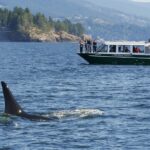
Orcas feel a little too big for a day trip. From Granville Island, you’ll head out on the semi-covered catamaran Jing Yu for a guided hunt for whales, dolphins, and seals in the Salish Sea with a marine naturalist. This is the kind of outing where the trip is as educational as it is exciting, because you’re learning what you’re seeing as you see it.
I particularly like the covered cabin plus open decks setup, which keeps you comfortable without trapping you inside when the action happens. I also appreciate the chance to learn from guides like captain Kevin and naturalist Marcos (and yes, naturalist Julia too, if you get her), with a real focus on behavior and ocean conservation. One drawback to plan around: food isn’t included, so you’ll want to bring your own snacks and warm layers.
In This Review
- Key highlights you’ll feel on this tour
- Why Granville Island starts this whale watch the right way
- Meeting at Wild Whales Vancouver on Granville Island
- Jing Yu’s layout: where you stand and why it helps
- The Salish Sea portion: 3–5 hours of real searching
- Orcas, humpbacks, and dolphins: how the sightings usually feel
- The marine naturalist adds the difference between seeing and understanding
- What to expect at each step of the day
- Granville Island check-in and safety briefing
- Salish Sea guided viewing
- Return to the Wild Whales Vancouver office
- Comfort, warmth, and packing: bring less anxiety, not just gear
- Timing reality: planning a day around 3–5 hours
- Is $165 worth it? A value check that makes sense
- Who this whale watch fits best (and who should skip)
- Should you book it?
- FAQ
- FAQ
- How long is the Vancouver whale watching tour?
- Where do I meet for the tour?
- Is food included on board?
- What wildlife might I see?
- Do they provide anything for warmth?
- Is there a washroom on the vessel?
- Are pets or drones allowed?
- Is alcohol allowed?
- What is the cancellation window?
Key highlights you’ll feel on this tour
- Semi-covered comfort on Jing Yu: weather protection inside, plus open viewing decks at the front and rear
- Real wildlife viewing time: a 3–5 hour outing that depends on where animals are, not just a fixed script
- Marine naturalist guidance: you’ll understand animal behavior and why conservation matters
- Whale sightings guarantee: the operator builds in a backup if sightings are limited
- Family-friendly design: suited for all ages, including children and infants
Why Granville Island starts this whale watch the right way
You’re not starting from some remote dock. You’re starting from Granville Island, which makes the whole plan feel easier. The meeting point is at Wild Whales Vancouver, on Granville Island, just south of downtown. That matters when you’re planning a day, because you can pair this with a casual morning or afternoon around the waterfront before you go.
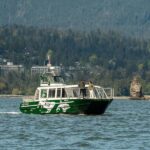
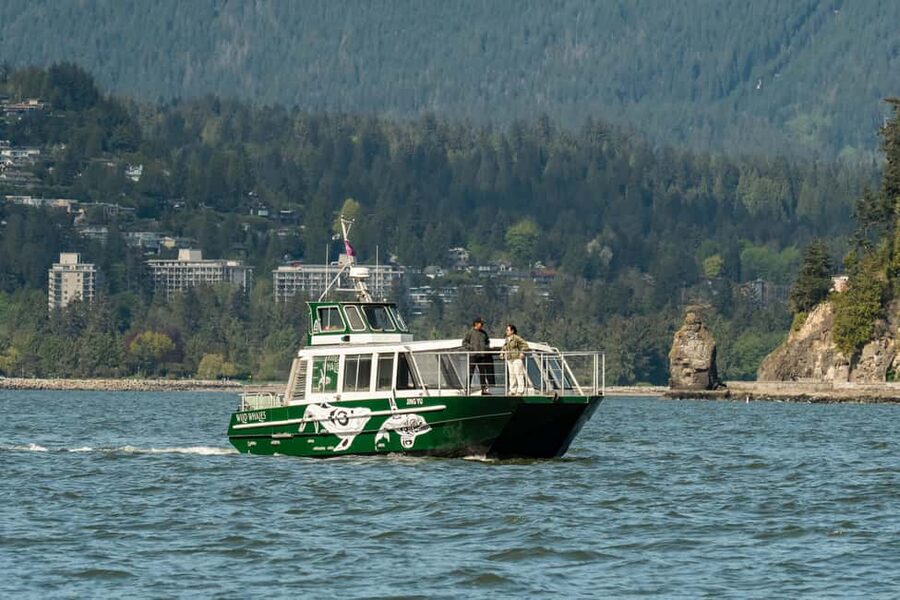
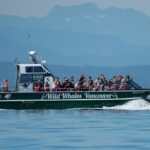
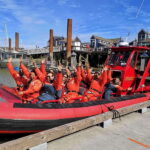
And then there’s the ship: the catamaran Jing Yu is the heart of why this tour feels workable. It’s semi-covered, with a cabin that protects you from wind and weather, plus a front open deck and open decks at the rear. So you get the best of both worlds: comfort when conditions are cold or choppy, and real sightlines when you need to track movement on the water.
This tour is also built around learning. You’re not just out there hoping for a miracle sighting. A marine naturalist guides the experience with explanations about animal behavior, local marine ecology, and coastal history—plus why ocean conservation is so important.
You can also read our reviews of more tours and experiences in Vancouver.
Meeting at Wild Whales Vancouver on Granville Island
You’ll meet at the Wild Whales Vancouver office at 1806 Mast Tower Ln, Vancouver, BC V6H 4B6. The location is on Granville Island, and the easy part is that you can reach it by car, public transport, or the small local ferry service.
If you’re driving, plan for paid public parking on Granville Island. Summer crowds can make parking tight, so arrive early. And don’t show up at departure time. The tour asks you to arrive 45 minutes before to get settled.
Once you’re onboard, you’ll get a safety briefing that takes about 30 minutes. It’s not just rules for rules’ sake. It’s time to get your bearings—where to stand for viewing, where you’ll be sheltered, and how the crew handles wildlife sightings from the water.
Jing Yu’s layout: where you stand and why it helps
On a whale watch, the boat setup can make or break your experience. Jing Yu is designed for that reality. The covered cabin gives you a place to warm up and dry off if weather turns. When the crew calls a sighting, you can head to the open decks for better sightlines.
Here’s what that means for you:
- If you get cold easily, you can duck inside without missing the entire action.
- If you want photos, you’re not stuck behind glass inside; you can move to the open front or rear decks when animals surface.
- For families, especially with kids and infants, the balance between covered space and open viewing reduces the stress of staying out in the elements the whole time.
One note to keep in mind: the tour is not recommended for pregnant people. The data you’re given doesn’t explain why, but it’s a clear restriction, so it’s worth respecting.
Also, there’s a practical comfort detail included: the vessel has washrooms, which matters on a 3–5 hour outing where you’ll want to focus on wildlife, not logistics.
The Salish Sea portion: 3–5 hours of real searching
After the safety briefing, you’re out on the Salish Sea for guided wildlife viewing. The itinerary frames it as about 5 hours, but the experience is designed as 3–5 hours depending on weather and where whales are.
That variable timing is not a flaw. It’s how whale watching works. Animals show up where they show up, and wind and water conditions affect safe navigation and viewing. The crew’s job is to keep you in the best possible area when sightings happen, instead of rushing you from one spot to another.
While you’re out there, you’ll be looking for a mix of marine life, including:
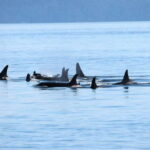
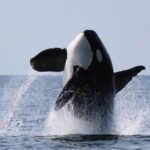
- Orcas
- Humpback whales
- Gray whales (if conditions and sightings line up)
- Dolphins
- Sea lions
- Harbor seals
The best part is the combination of guidance and flexibility. When the naturalist is talking, it’s tied to what you’re likely seeing—animal behavior, hunting patterns, and what to look for when animals surface and move through the water.
Orcas, humpbacks, and dolphins: how the sightings usually feel
When whale watching is good, it doesn’t feel like a checklist. It feels like a sequence of moments. This tour’s wildlife highlights are built around that.
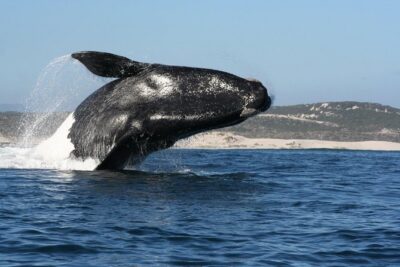
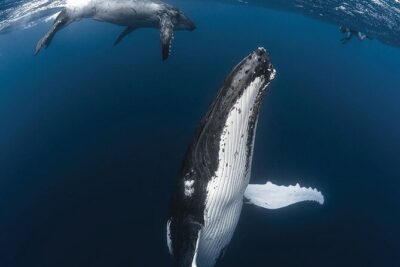
You’re told to expect orcas, humpbacks, dolphins, sea lions, and harbor seals. That’s a solid mix: fast-moving dolphins give you action, while larger whales create the bigger “wow” sightings that make you slow down and just watch.
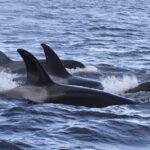
One review experience highlights orcas and humpbacks in fairly close proximity, and another specifically mentions orcas hunting and even with prey in their mouths. That’s exactly the kind of moment you remember later, because it’s not just seeing animals—it’s seeing behavior.
There’s also the reality check: wildlife sightings are wild. You can be out for hours and still only catch brief surface time. That’s why the included whale sightings guarantee matters. It’s the operator’s way of acknowledging that nature doesn’t run on schedules.
The marine naturalist adds the difference between seeing and understanding
A whale watch can either be mostly waiting, or it can be a guided lesson you’ll enjoy while it happens. The naturalist role is the key here.
The tour’s guide is there to explain:
- how animals behave
- what you’re looking at on the water
- why conservation matters for the local ecosystem
In one experience, you’ll hear vivid storytelling from guides like Marcos, described as informative and passionate. Another account credits naturalist Julia with making the tour fun and educational through anecdotes tied to each animal sighted.
For you, this translates into a better viewing experience. You’ll spend less time guessing. When you see something—breaching, surfacing, traveling fast, or lingering—you’ll usually understand what the animal is likely doing and why it matters.
And since the tour also touches on coastal history, it adds context to the Salish Sea beyond just the animals. You’re not only chasing whales; you’re learning what makes this area special and why people work to protect it.
What to expect at each step of the day
Here’s the shape of the tour from start to finish, and what each part means for your comfort and outcome.
Granville Island check-in and safety briefing
You’ll meet at the Wild Whales Vancouver office on Granville Island. Then you’ll do a safety briefing around 30 minutes. This is when you’ll be reminded of rules like staying away from marine life and how to move around the vessel safely.
Salish Sea guided viewing
This is the main block. You’re out for 3–5 hours, and the route and time can shift with weather and whale location. The crew focuses on marine life viewing and scenic views as you travel.
If you’re hoping for specific species, keep your expectations flexible. The tour is designed to maximize your chances by moving where animals are, not by sticking to one area no matter what.
Return to the Wild Whales Vancouver office
After the viewing period, you’re back at the same starting point. The experience is built to end where it started, making it easy to keep your day plan simple.
Comfort, warmth, and packing: bring less anxiety, not just gear
This is a cold-water experience when weather changes. You’ll feel it, even on a semi-covered vessel. Plan for that.
What to bring:
- Warm clothing
- Hat
- Camera
- Food and drinks
- A reusable water bottle
Optional warmth gear is included: you can get a wind breaker or suit for warmth. That’s helpful, especially if you don’t pack the right layers. But I’d still dress like you might be on deck when temperatures drop.
Also, bring food because food and snacks are not included. You can bring your own, so pack something that won’t be a hassle in cool air. A thermos drink can be a morale booster if you’re out longer than you planned.
A few rules to know up front:
- No pets
- No drones
- No alcohol and drugs
- No touching marine life
- No fireworks
These rules aren’t there to spoil fun. They protect wildlife and keep everyone safe and comfortable.
Timing reality: planning a day around 3–5 hours
The tour duration is listed as 5 hours, but you should treat it as 3–5 hours. The operator adjusts time based on factors like weather and where whales are located.
That means you should build some buffer into your schedule. If you’re stacking this with dinner reservations or a ferry connection, give yourself leeway.
The upside is that the tour isn’t rushing. You’ll get time on the water when the crew is in the right area for sightings. The tour also includes washrooms, so you’re not stuck planning bathroom breaks mid-search.
Is $165 worth it? A value check that makes sense
At $165 per person, this isn’t the cheapest activity in Vancouver. But it’s also not just “ride a boat and hope.” You’re paying for several things working together:
- A guided tour with a marine naturalist (not just a captain driving)
- A custom-built semi-covered catamaran with viewing decks
- Inclusion of optional wind breaker or suit for warmth
- Washrooms onboard
- A whale sightings guarantee
- A relatively long window on the water, typically around 5 hours and sometimes longer within that 3–5 hour range
Where the value can slip for some people is simple: you have to bring food and snacks. But that’s also a controllable cost. If you pack your own, you’re not surprised by extra spending once you’re already onboard.
I see this as good value if you care about understanding what you’re seeing and you want comfortable viewing rather than an all-open, all-wind boat.
Who this whale watch fits best (and who should skip)
This tour works well for:
- Families with children and infants, because Jing Yu has both covered and open deck space
- People who want wildlife viewing plus explanations about behavior and conservation
- Tour-goers who don’t want to be stuck fully indoors, since you can move to open decks when animals appear
It may not work as well for:
- Anyone who is pregnant, since it’s not recommended
- Anyone who expects a fixed route or guaranteed time with each animal (the tour duration and route depend on where animals are found and weather)
Should you book it?
If your Vancouver plan includes wildlife and you’d rather learn than just guess, I think this is a strong choice. The mix of semi-covered comfort, front and rear open viewing decks, and a marine naturalist gives you a better shot at both memorable sightings and real understanding of what’s happening on the water.
Book it if you:
- want a family-friendly whale watch setup
- care about conservation and animal behavior, not just photos
- appreciate a whale sightings guarantee
Skip it if:
- you can’t dress for cool, changeable weather
- you need guaranteed exact timing regardless of whale location
- the tour’s pregnancy restriction applies to you
FAQ
FAQ
How long is the Vancouver whale watching tour?
The tour runs about 3–5 hours depending on factors like weather and where the whales are located. It’s commonly listed as about 5 hours for the experience.
Where do I meet for the tour?
Meet at Wild Whales Vancouver on Granville Island at 1806 Mast Tower Ln, Vancouver, BC V6H 4B6.
Is food included on board?
No. Food and snacks are not included, so you should bring your own.
What wildlife might I see?
The tour highlights orcas, humpback whales, gray whales, dolphins, sea lions, and harbor seals. Wildlife sightings are tied to where animals are found that day.
Do they provide anything for warmth?
You can use an optional wind breaker or suit for warmth, and you should still bring warm clothing and a hat.
Is there a washroom on the vessel?
Yes, washrooms are included on board.
Are pets or drones allowed?
No. Pets and drones are not allowed.
Is alcohol allowed?
No. Alcohol and drugs are not allowed.
What is the cancellation window?
You can cancel up to 24 hours in advance for a full refund.