REVIEW · MAUI
Maui Eco-Raft Tour: Eye-Level Whale or Dolphin Watching – Lahaina
Book on Viator →Operated by Hawaii Ocean Rafting · Bookable on Viator
A calm way to watch Maui’s wild life. This eco-leaning zodiac raft gives you eye-level views, and the onboard hydrophone lets you hear whale songs during season. I also like that the crew keeps things intimate on a small boat, with narration geared to what you’re actually seeing out there.
One thing to plan around: this tour is not suited for pregnant people, and it has a strict minimum age (no children under 3 on the raft). It also needs physical mobility for boarding, so if you’re dealing with back or neck issues, this may not be the right fit.
In This Review
- Key things that make this tour worth your time
- Front Street boarding: where the tour starts and why it matters
- Eye-level whale spotting from December to April (and how the search works)
- Hydrophone whale songs and marine naturalist narration on deck
- Summer dolphin watching plus coastal sightseeing (with included snacks)
- What to bring: sun protection, slip-on shoes, and planning for spray
- Price and value: is $85.16 worth it for Maui wildlife time?
- Who this tour fits best (and who should skip it)
- Should you book the Maui Eco-Raft Whale or Dolphin Tour?
- FAQ
- What season is for whales, and what season is for dolphins?
- How long is the tour?
- What ages are allowed on the raft?
- Is the hydrophone included?
- Is this tour okay for pregnant people?
- Is an up-close wildlife encounter guaranteed?
Key things that make this tour worth your time
- Eye-level viewing from a low-to-the-water zodiac raft for clear sightlines
- Hydrophone listening to whale songs during the whale season
- Marine naturalist narration that connects behavior to the Hawaiian ocean ecosystem
- Small group size (max 25) for a more family-style feel
- You’ll likely get wet, so it’s more experience than sitting pretty
- Wild encounters aren’t guaranteed, but the crew actively searches and stops when wildlife shows up
Front Street boarding: where the tour starts and why it matters
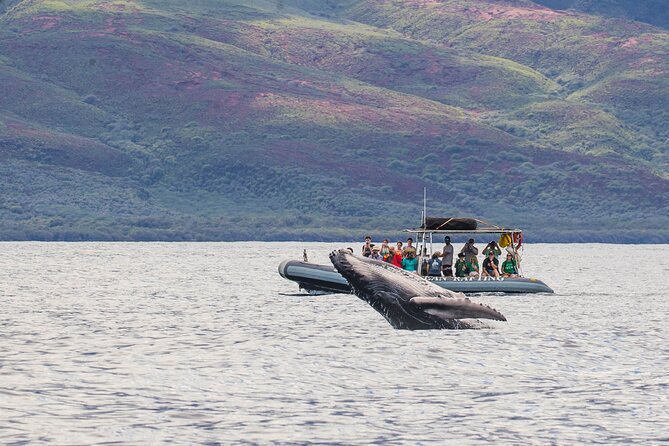
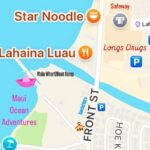
The day begins at 1223 Front St, Lahaina. That matters more than you’d think, because the tour leaves promptly, and you’re expected to arrive about 30 minutes before boarding. If you show up late, you can miss the boat, plain and simple.
Check in is set up to move fast. Once you get your boarding pass, you’ll transition onto the low-water raft. Reviews mention the boarding process is smooth, but you should still treat it like a small-boat situation: bring simple footwear and expect to step up and down as part of getting settled. Many people also mention rain ponchos are available, but you should still come ready for spray.
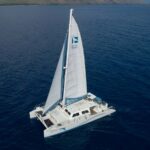
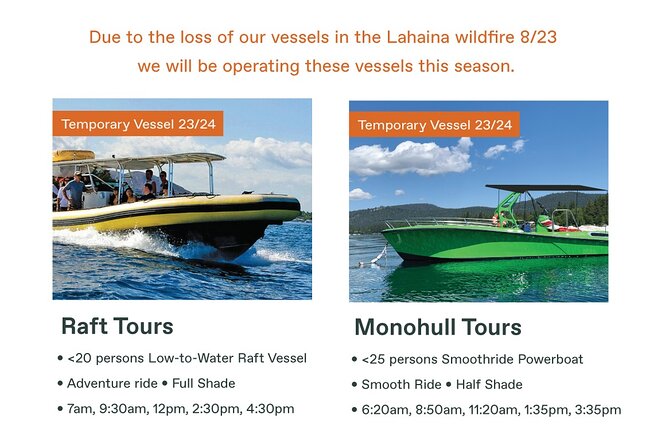
This is not a huge catamaran scene. The maximum group size is 25, and on the water that translates into a better chance of seeing what’s happening without craning over strangers. You’ll get a more direct relationship with the captain and guide too, which shows up in how they manage where you sit and when they stop.
Practical tip: pack your sun gear even if the sky looks iffy. Shade varies on the raft, and Maui sun plus ocean spray is a rough combo.
You can also read our reviews of more tours and experiences in Maui.

Eye-level whale spotting from December to April (and how the search works)
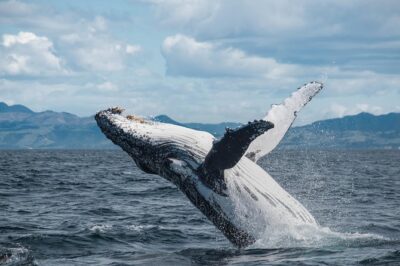
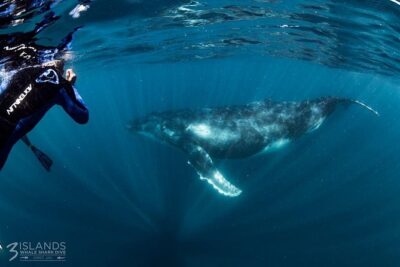
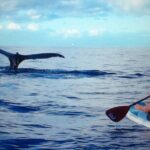
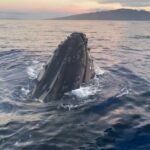
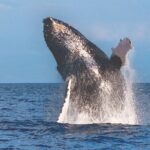
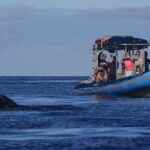
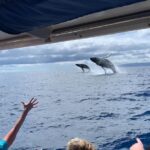
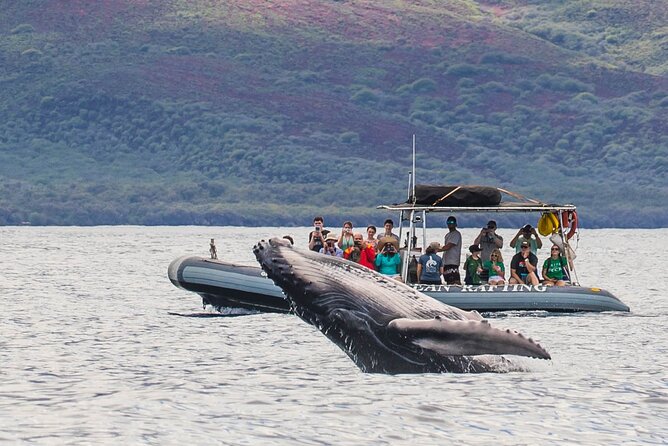
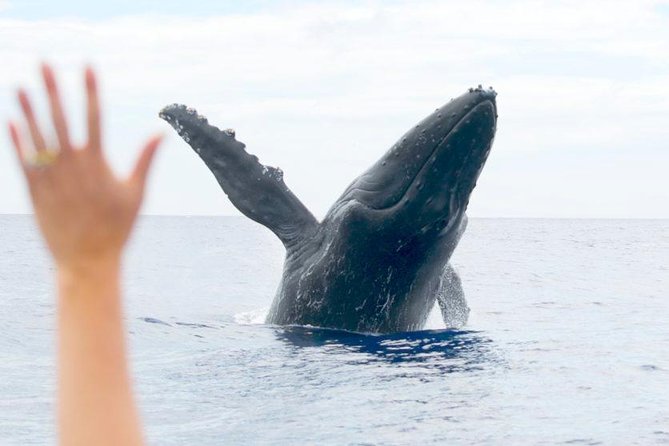
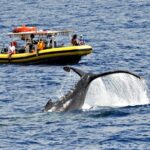
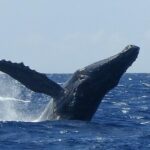
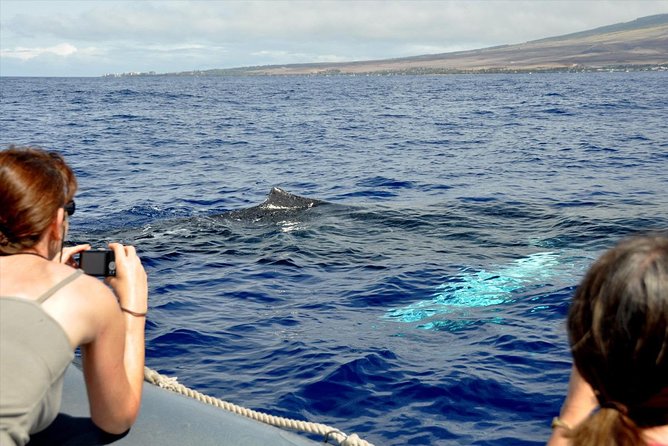
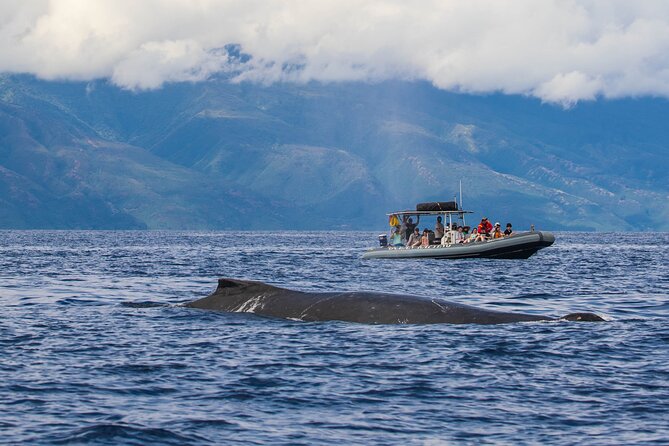
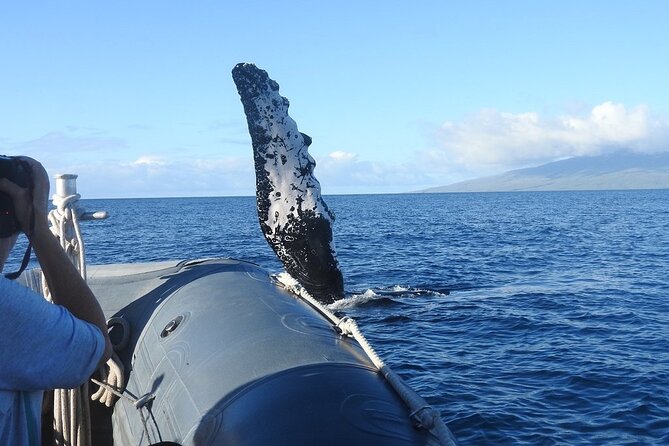
From December to April, this is a humpback whale tour. You’ll head out from Lahaina and start looking for migrating whales. The main point is the how of viewing: the zodiac raft sits low, so your eyes are closer to the waterline. That makes spotting blows, tail motions, and surface activity easier than you’d get from higher platforms.
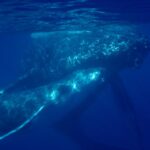
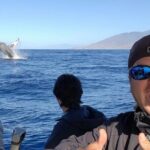
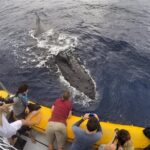
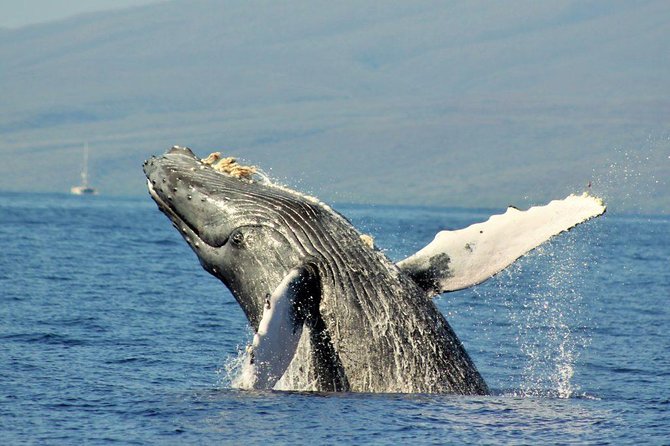
Once wildlife is spotted, the raft stops. That is huge for photography and for actually seeing the details—mothers, calves, and escort behaviors can be visible when you’re not bouncing past the action. The best sightings on these trips often come from the crew staying with the whales and repositioning smartly, while still respecting distance.
The itinerary keeps a simple rhythm. Conceptually, it goes like this:
- Stop 1: Lahaina is your launch point. You check in, board, and head out promptly.
- Stop 2: Maui is where the real work happens: cruising, scanning, and switching locations until the whales are active enough for the whole group to enjoy.
What I like about this setup is how it balances “searching” with “stopping.” If whales are active, you’re not stuck staring at nothing for the whole ride. And if the first locations aren’t great, the captain has room to adjust because the raft is maneuverable.
Reality check: up-close encounters aren’t guaranteed. You’re watching animals in the wild. The payoff comes from stacking your odds: the crew looks actively, and the raft design helps you capitalize on whatever shows up.
Hydrophone whale songs and marine naturalist narration on deck
This tour doesn’t treat whales as just something to spot. It treats them as something to listen to and understand. The hydrophone is included, and when you’re in whale season, that’s where you can hear whale vocalizations.
In reviews, people repeatedly call this the highlight. It makes the experience feel more layered than a visual-only tour. You might see a whale for minutes, but the sound adds another channel—like you’re not just observing the ocean, you’re getting a glimpse into how these animals communicate underwater.
The onboard marine naturalist narration is also part of what makes the trip feel worth the money. Guides are presenting based on what you’re seeing in real time, and several reviews mention crew members who clearly spend time figuring out what’s happening—like Captain Jack paired with marine biologist Jess, or Captain Mark with Olivia. Names pop up often, but the bigger takeaway is how they translate behavior into plain language: why whales surface when they do, what different actions can signal, and how the Hawaiian ocean ecosystem connects all of this.
You’ll also want to expect the audio experience to depend on conditions. If it’s choppy or noisy, it can be harder to focus, but when conditions line up, hearing whale songs is a wow moment.
What to expect during the tour: you’ll be moving around while the crew monitors activity, then pausing when they find good behavior. That means you’re not locked into one spot where you’re stuck if the whales choose a different direction.
Summer dolphin watching plus coastal sightseeing (with included snacks)
When it’s not whale season, the same format turns into dolphin watching and coastal sightseeing. The time on the water stays roughly the same (about 2.5 hours), but the target wildlife changes based on season.
On the dolphin option, snacks and beverages are included. People tend to notice this because a raft tour is active and spray-y, and having food mid-ride can be the difference between enjoying the whole outing and feeling drained halfway through. There’s also a shade variable on the boat, so that snack break matters more when the sun is strong.
As for sightings: dolphins are wild too, so you’re not buying a guarantee. Still, the raft design helps here as well. Dolphins can pop up quickly near the surface, and an eye-level view makes it easier to catch fast movements.
If you’re traveling in summer, I think this option works especially well for people who want an ocean experience without waiting for whales. You still get the marine-naturalist narration feel and an intimate boat setting, but you’re focused on a different kind of marine activity.
Quick caution from experience on small boats: you will likely get wet, even if the weather looks mild at check-in.
What to bring: sun protection, slip-on shoes, and planning for spray
A low-water raft is fun, but it’s not a “stay dry and perfect tan” situation. The tour explicitly warns you should plan to get wet: ocean spray and light rain can happen. That’s why your best strategy is to dress like you expect moisture and then act pleasantly surprised if it stays light.
Here’s what you should bring:
- Sun protection (hat, sunglasses, reef-safe sunscreen)
- A jacket or layer if you run cold, especially in breezy conditions
- Reef-safe rub-on sunscreen only (no spray sunscreen is permitted)
- Slip-on shoes (reviews mention you remove shoes when entering the boat)
Shade varies on the raft, so sunscreen is not optional. Reef-safe rub-on matters because your skin routine is part of ocean stewardship here. If you show up with spray sunscreen, you may not be able to use it as planned.
Also consider basics that make small-boat life easier: something to keep your phone secure, and a way to protect your camera. The captain will stop for sightings, but that doesn’t mean you’re stationary in every situation. Motion plus spray equals “keep gear protected.”
If you’re the type who hates being uncomfortable, this tour may still work, but you need to commit to smart clothing. Ponchos can help in cold or rainy conditions, and reviews mention ponchos are available, but you shouldn’t count on them as your only plan.

Price and value: is $85.16 worth it for Maui wildlife time?
At $85.16 per person, this tour sits in the “midrange but focused” category. You’re paying for two things: (1) a small, eye-level boat that increases your odds of seeing surface behavior clearly, and (2) the extras that make it feel educational, like narration and hydrophone listening (whale season).
If your priority is whales as a sensory experience, the hydrophone feature is a big part of the value. Many people in reviews highlight hearing whale songs as the payoff. That’s different from tours where you only watch and point.
You’re also not fighting a mega-boat crowd. The maximum is 25, and the vibe described is family-style and intimate. That matters because whale watching is one of those activities where crowd pressure can ruin the magic. Here, you have more room to see and move your attention between the guide, the captain, and the water.
Now for the honest part: wildlife encounters aren’t guaranteed, and you might not get the exact behavior you hope for. The difference is that the crew actively searches and stops at sightings. In reviews, multiple people mention lots of whales and even close family groups, including calves. But the correct mindset is this: you’re buying time on a good platform with strong crew skills, not a stamped guarantee.
Weather can affect what’s comfortable too. One review mentions a weather rebook that turned out great, and that kind of flexibility can help you salvage your schedule in Maui’s ever-changing conditions.
My rule of thumb: if you want the best chance of clear views without a huge boat, this price makes sense. If you hate getting wet or you need guaranteed wildlife behavior, you might be disappointed.
Who this tour fits best (and who should skip it)
This is a strong fit for:
- People who want eye-level viewing rather than distant sightseeing
- Families and couples who enjoy guided interpretation and small-group energy
- Wildlife fans who value the storytelling and listening side (not just spotting)
You should think twice or skip if:
- You’re pregnant (not suited for safety reasons)
- You have back/neck injuries (not suited)
- You’re traveling with a child under 3 (minimum age is 3 for raft boarding)
- You don’t have the physical mobility needed for boarding
I also think this tour is best when you can be flexible with the day. It leaves promptly, so build in buffer time at the meeting point, and be ready for spray and wind.
If you’re in Lahaina and want one high-impact ocean outing, this usually lands well because it’s focused: about 2.5 hours, clear starting point, and a crew that works hard to find activity.
Should you book the Maui Eco-Raft Whale or Dolphin Tour?
Book it if you want a hands-on wildlife experience where you’re close to the water, guided by a marine naturalist, and (in season) able to hear whale songs through the hydrophone. The small zodiac raft design and the consistent praise for the captain-crew teamwork are exactly the kind of details that make a tour feel “worth it” instead of just “nice.”
Skip it if you need a perfectly dry outing, if you can’t handle small-boat boarding, or if your comfort requirements don’t match a low-to-the-water ride that gets spray. Also, if you’re in whale season and your heart is set on a specific behavior, keep expectations flexible. The crew can’t control what the animals do.
If you’re okay with getting wet and leaving room for the wild part of wildlife, you’ll likely come away remembering the sounds as much as the sight of Maui’s ocean visitors.
FAQ
What season is for whales, and what season is for dolphins?
From December to April, this tour focuses on whale watching. During summer months, it shifts to dolphin watching and coastal sightseeing.
How long is the tour?
The tour runs about 2 hours 30 minutes (approx.).
What ages are allowed on the raft?
Children must be 3 years or older. No babies are allowed on the raft, and no children under 3 are permitted.
Is the hydrophone included?
Yes. The tour includes a hydrophone to listen to whale songs during the whale season.
Is this tour okay for pregnant people?
No. The tour is not suited for pregnant persons for safety reasons.
Is an up-close wildlife encounter guaranteed?
No. Up-close encounters are not guaranteed since animals are in the wild. The crew stops at sightings, but behavior and proximity depend on conditions and wildlife activity.