REVIEW · MAUI
2 Hour Prime Time Maui Whale Watching
Book on Viator →Operated by Maui Ocean Adventures · Bookable on Viator
A humpback sighting can happen fast.
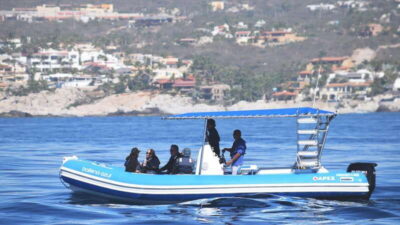
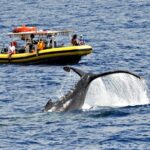
This 2-hour Maui whale watching cruise runs out of Mala Boat Ramp and aims for that magic mix of up-close whales, West Maui scenery, and a calmer feel than the big-boat crowds. I especially like the small group size (max 20), which keeps the boat feeling more like a team than a cattle line, and I like that the crew guides you through what you’re actually seeing, not just where to look. One thing to plan for: it’s a no shoes cruise with no onboard restrooms, so come ready for a couple hours on a small vessel.
The route is built around prime whale time in Maui’s waters, with standout island views and a crew that keeps the experience hands-on. You’ll get breathtaking sightlines toward Moloka’i, Lana’i, Kaho’olawe, Haleakalā, and the West Maui mountains, plus chances to hear whale sounds via an in-water setup and see the crew’s underwater footage at a stop. The main consideration is simple: bring a little sea-move tolerance, because you need moderate physical fitness and the day depends on weather.
In This Review
- Key things I’d watch for on this whale watching cruise
- Why Prime Time on Maui Waters Can Mean Better Whale Odds
- Getting on Board at Mala Boat Ramp: The Check-In That Sets the Tone
- The 2-Hour Plan: How the Cruise Usually Flows on the Water
- Small-Group Watching: Why 20 People Feels Different
- The Crew’s Role: Spotting Plus Real Explanations
- West Maui Views That Keep You Looking Even Between Whale Surfaces
- What You Might See: Breaches, Calves, Battles, and the Fun Extras
- Comfort, Safety, and Practical Tips for a Smooth Morning
- Is This Whale Watch Worth Your Time in Maui?
- Should You Book This 2-Hour Prime Time Maui Whale Watching Tour?
- FAQ
- Where is the tour meeting point?
- How early do I need to check in?
- How long is the cruise?
- Is there a restroom onboard?
- What size group is this tour?
- Does this tour offer English?
- Is free cancellation available, and how does weather affect the tour?
Key things I’d watch for on this whale watching cruise
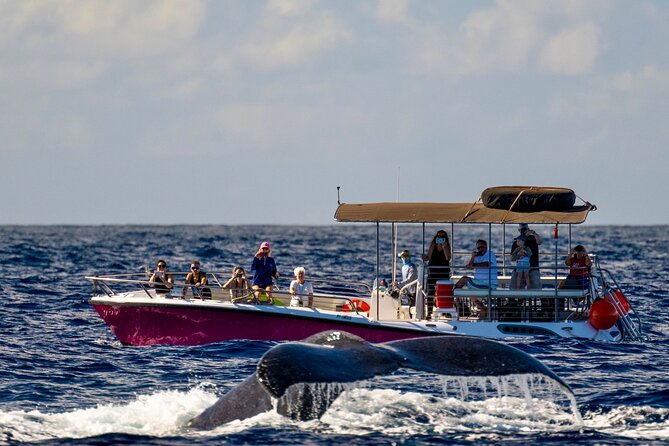
- Max 20 travelers: you get a better view from where you’re seated and it stays relaxed
- No shoes onboard: plan easy footwear you can ditch quickly for boarding
- Prime time in Maui’s marine sanctuary waters: the goal is frequent whale activity in the wild
- Whale behavior coaching from the captain and crew (ask questions, follow their spotting cues)
- Whale song and underwater moments: there’s time for listening and sharing underwater media
- West Maui island-horizon views: Moloka’i, Lana’i, Kaho’olawe, Haleakalā, plus mountain backdrops
Why Prime Time on Maui Waters Can Mean Better Whale Odds
“Prime time” in Maui isn’t marketing fluff. Humpback whales are seasonal, and the most consistent sightings happen when the timing lines up with their breeding and calving behavior in the region. This cruise is designed around that window, and it’s aimed at you seeing humpbacks in their native wild habitat rather than treating whales like distant scenery.
I like that the tour doesn’t pretend whales are predictable on a map. Instead, it leans on an onboard plan: the crew watches, communicates, and positions the boat where whale activity is most likely to show up. That approach matters because humpbacks don’t show on schedule. They surface, breathe, sing or rest, then move again.
Also, the tour is scheduled for a morning start (8:50 am). In Maui, mornings often come with smoother water and fewer waves than later in the day, which makes a big difference for comfort and for how easy it is to spot behavior from deck height.
You can also read our reviews of more tours and experiences in Maui.

Getting on Board at Mala Boat Ramp: The Check-In That Sets the Tone
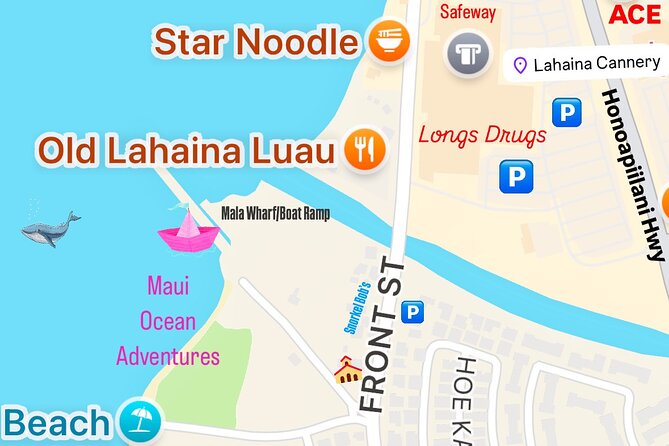
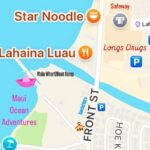
Your day starts at Mala Boat Ramp in Lahaina. Check in at least 20 minutes before departure so you’re not stressed, and so you’re ready when the boat pulls out.
One detail I’d call out: this is a no shoes cruise. That means you should wear footwear that’s easy to remove and put back on quickly. The boat floor is set up for bare-foot comfort and stability, and the overall setup is meant for people to move around without tripping over slick deck surfaces. If you’re bringing anyone with mobility limits, plan ahead for how they’ll handle shoe changes onshore and at the ramp.
There’s another practical point: no restrooms onboard. That doesn’t kill the experience, but it does change how you prepare. Use the time before check-in to take care of what you need, then focus on the whales instead of logistics.
The 2-Hour Plan: How the Cruise Usually Flows on the Water
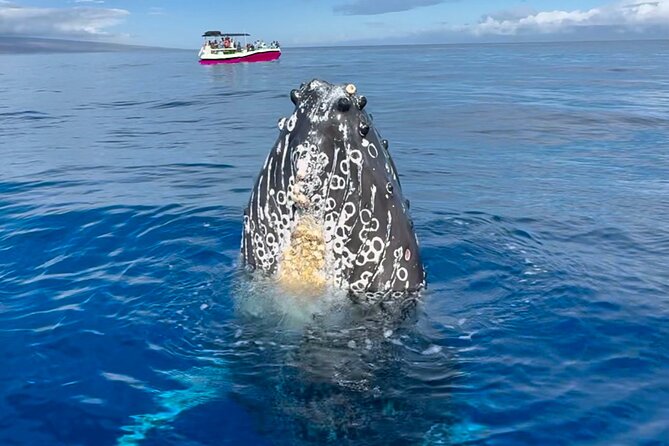
This is a two-hour cruise that stays out on Maui’s marine sanctuary waters. The exact path changes day to day based on where whales are active, but you can think of it as a steady mix of scouting and then “hold-and-watch” time when the crew finds activity.
Here’s what you should expect in practice:
- First stretch: spotting and positioning. The crew looks for whale movement and surfacing patterns, then puts the boat in a spot where everyone has a workable view.
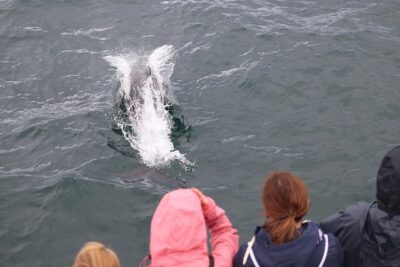
- When whales show up: behavior time. Once you’re near whales, the crew helps you read what they’re doing: surface patterns, how a mother and calf move, and why a whale might breach or slap its fins.
- A later stop: whale sounds and underwater media. More than one review mentions an in-water microphone for whale song/sounds, and another mentions the crew sharing underwater video footage at a second stop. That’s the kind of add-on you rarely get on casual whale watching.
The big value of a tight 2-hour format is that you get enough time to see multiple moments, without turning the day into a half-day sea day. For many people, it feels like the right length: long enough for real behavior, short enough that the morning stays fun instead of exhausting.
Small-Group Watching: Why 20 People Feels Different
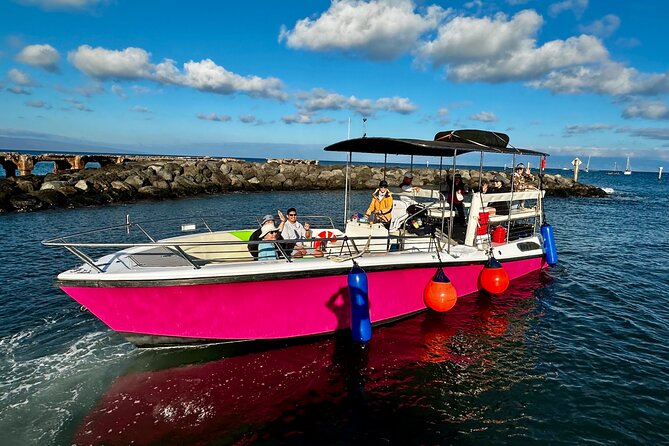
A max of 20 travelers is more than a headcount. It changes how the boat experience feels.
On larger tours, you often end up stuck behind shoulders or trying to peer over someone’s phone. Here, the boat setup and seating help you get a clear view from wherever you’re seated, and the crew can talk to the group without competing with noise and constant repositioning.
In the reviews, people repeatedly mention that they never felt rushed, and that safety felt handled even when the boat found whales quickly. That’s the sweet spot: you want the crew to move with purpose, but you also want calm and clear communication once you’re on whale time.
And I’ll say this plainly: if you’re the kind of person who hates “tour herd” energy, this smaller boat is one of the reasons it gets consistently high marks.
The Crew’s Role: Spotting Plus Real Explanations
The captain and crew are the difference between seeing whales and understanding them. This cruise leans hard into that. Instead of vague commentary, the crew explains whale behavior in a way that helps you predict what you’ll see next.
From the review details, you may meet an all-female crew including names like Captain Emma and crew members such as Lexi and Danielle (and you might also see another crew member depending on the day). The point isn’t the names, though they’re worth noting if you enjoy recognizing the people who helped you. The point is how the crew teaches.
You’ll usually get guidance like:
- what humpbacks are doing when they surface in certain patterns
- how to tell the difference between a mom and calf’s movements versus other whales
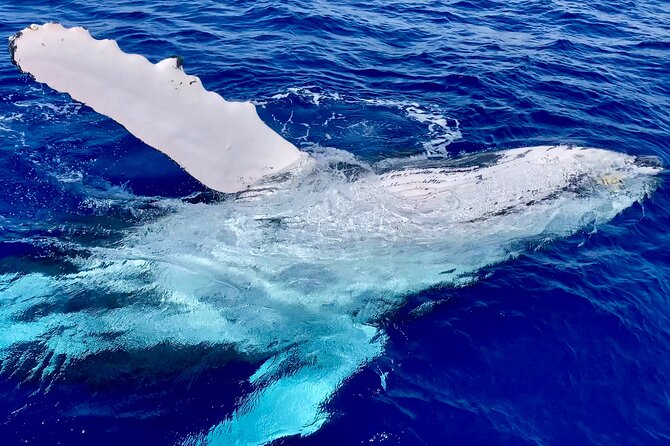
- what to look for when whales start acting like they’re “performing” (breaches, fin slaps, and more)
If you’re a first-timer, this kind of coaching makes the tour feel personal instead of random. If you’re a repeat visitor to whale watching, it gives you angles you might miss when you’re just staring at spouts.
One of the coolest add-ons mentioned in reviews is the chance to hear whale sounds via an in-water microphone. Even when you think you’re ready for whale watching, that part can reset your brain. It turns the experience from “I saw whales” into “I experienced them.”
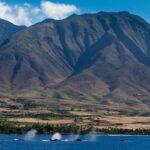
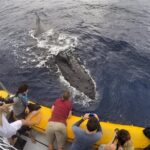
West Maui Views That Keep You Looking Even Between Whale Surfaces
Whale watching isn’t just about the moment a whale pops up. It’s about staying engaged for the whole ride, and Maui’s horizon helps.
As you head out, you can expect views toward:
- Moloka’i
- Lana’i
- Kaho’olawe
- Haleakalā
- the West Maui mountains
That matters because it gives you something to enjoy even during quiet periods, and it makes photos and video more interesting than a constant stare at one direction. It also makes the cruise feel like a Maui experience, not a single-event sprint.
If you like landscape views, you’ll find yourself scanning the horizon as much as the water. And if you’re lucky, you’ll catch whales that surface near those island lines, which makes the scene feel extra cinematic.
What You Might See: Breaches, Calves, Battles, and the Fun Extras
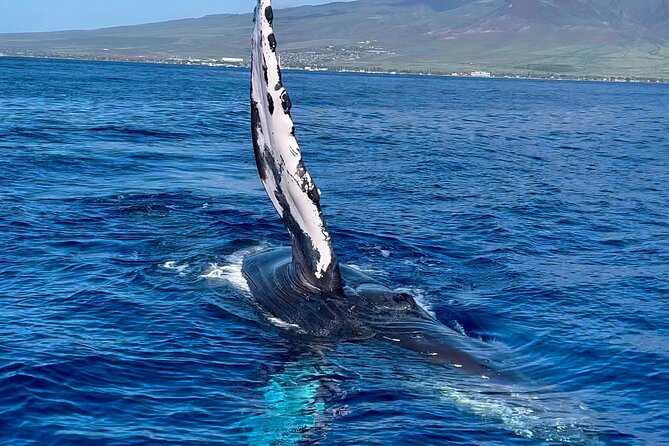
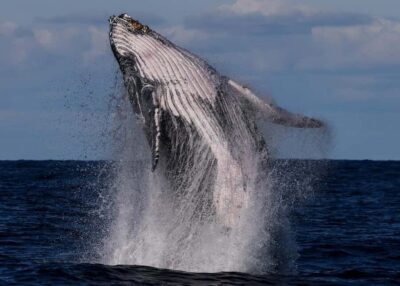
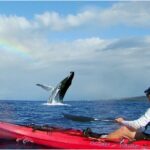
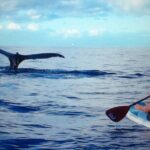
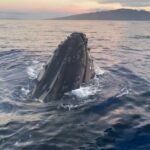
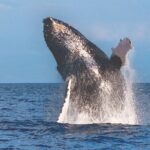
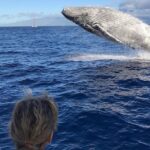
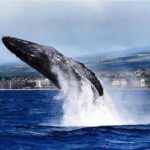
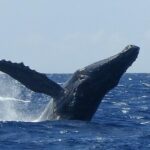
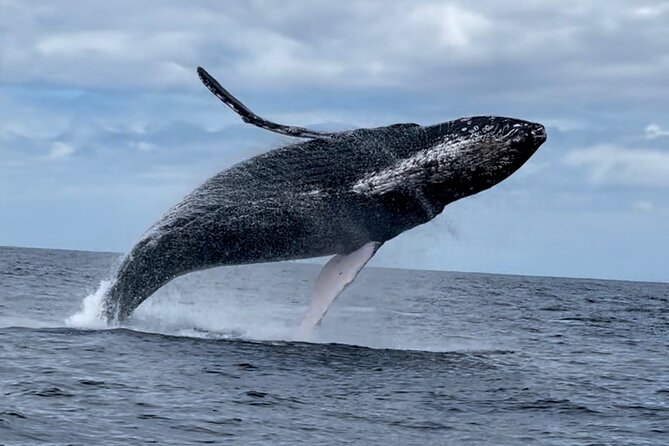
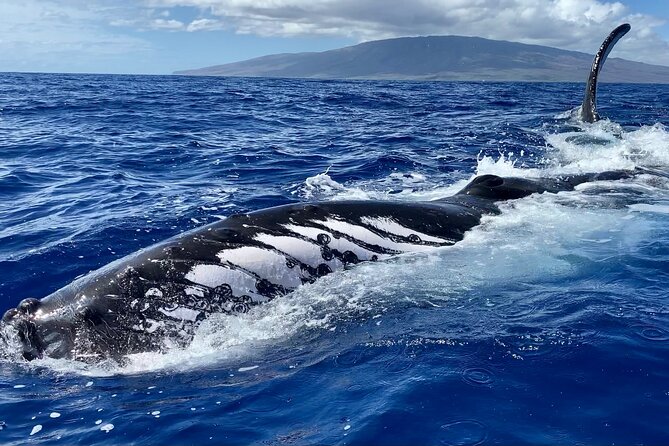
The tour highlights guaranteed whale sightings, so the focus is humpbacks. Beyond that, expect a mix of behaviors. Reviews mention plenty of dramatic moments, including:
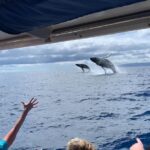
- breaches and repeated surface activity
- fin slaps
- whales interacting or what people call battles
- very close mom-and-calf sightings
In one review, someone described seeing a mother and her calf within close range. Another mentioned an intense number of breaches during a morning cruise. Those specifics aren’t guaranteed, but they show the kind of behavior the crew is often able to find.
You might also get bonus wildlife. A few reviews mention:
- turtles
- dolphins
- and even sightings of sharks (not a guarantee, but it happens enough to be worth mentioning)
The best mindset is simple: when you see one whale, don’t assume the show is over. The crew is watching for patterns, and multiple whales can appear in the same general time window, especially when the boat has found a productive area.
Comfort, Safety, and Practical Tips for a Smooth Morning
This is a moderate-physical-fitness outing. That doesn’t mean you need to be an athlete, but you should be comfortable boarding from the ramp, moving around on the boat, and standing/sitting in a way that works on open water.
A few practical tips that match what people have said:
- Plan for bare feet. Bring easy slip-on footwear for before and after, and be prepared that the boat experience itself is shoe-free.
- If you’re sensitive to motion, try to sit where you feel most stable. I can’t promise specific seating, but a lot of folks say the boat’s setup and visibility help you enjoy the ride more.
- Bring a light layer if you run cold in ocean wind. Morning air can feel brisk even when the sun is strong.
- Bring patience. If the water is calm, spotting can feel almost effortless. If conditions are rougher, it can take more effort to catch surfacing.
Safety also comes up in reviews. People repeatedly note that the crew ran things professionally and didn’t rush passengers into anything risky when getting close to whales.
One more comfort item: bottled water is included. The water is served using paper cups with filtered water from a cooler, which is a nice touch if you’re trying to reduce plastic waste.
Is This Whale Watch Worth Your Time in Maui?
Even without pricing listed here, you can judge value by what you get for your time and attention.
For me, the biggest value signals are:
- Guaranteed whale sightings focus the trip on the main reason you’re here
- Small group max 20 gives you a more intimate view and easier conversations
- Two hours is long enough for real behavior, but not so long you feel drained
- Crew-led learning turns random viewing into something you can understand
- Added whale-media moments (in-water microphone and underwater video sharing) give you more than just surface sightings
- Filtered water included plus a cleaner boat experience
If you want the “most effort per hour” whale watching experience, this kind of format usually wins. If you prefer a big party vibe with nonstop crowd noise and lots of seats, you might prefer a larger vessel. But if you want to actually hear explanations and feel like you’re part of the action, smaller tends to fit better.
Also, going at 8:50 am lines up with the idea that morning often brings better water conditions. That can mean easier spotting and less discomfort.
Should You Book This 2-Hour Prime Time Maui Whale Watching Tour?
Book it if you want:
- a small-group whale watching experience
- guided whale behavior talk instead of just drifting around
- a morning schedule that often feels calmer
- the chance to hear whale sounds and see underwater footage
Skip it (or rethink) if:
- you need onboard restrooms (there aren’t any)
- you’re not comfortable with a no shoes boat setup
- you strongly dislike open-water riding and you expect rough seas to ruin your day
If your priority is humpback whales in Maui, close-up viewing, and a crew that actually helps you understand what’s happening, this tour is a solid bet.
FAQ
Where is the tour meeting point?
You’ll meet at Mala Boat Ramp in Lahaina, HI 96761. The activity starts and ends back at the meeting point.
How early do I need to check in?
Check in at Mala Boat Ramp at least 20 minutes prior to departure.
How long is the cruise?
The tour is about 2 hours.
Is there a restroom onboard?
No. There are no restrooms onboard.
What size group is this tour?
This activity has a maximum of 20 travelers.
Does this tour offer English?
Yes, the tour is offered in English.
Is free cancellation available, and how does weather affect the tour?
You can cancel for a full refund up to 24 hours in advance. The tour requires good weather, and if it’s canceled due to poor weather, you’ll be offered a different date or a full refund.